 オフィシャル
Morning Practice at Arashio Stable
―Feel the Energy of Sumo Before the May Tournament―
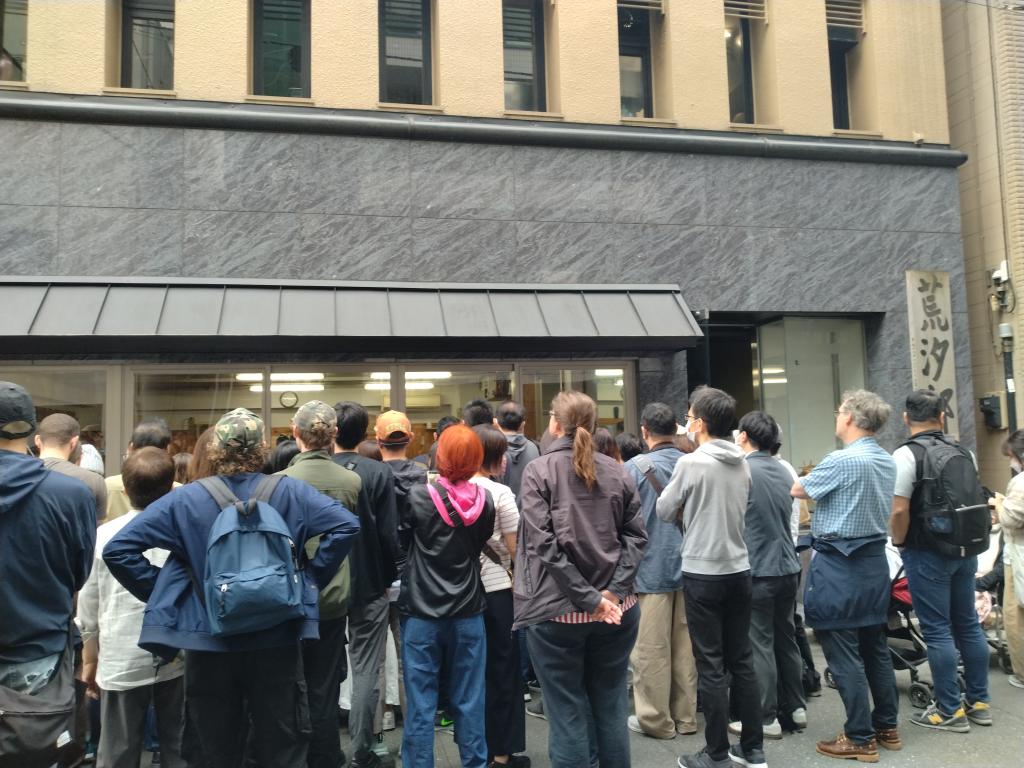
Arashio Stable is the only sumo stable in Chuo City, Tokyo.
I visited the morning practice there just before the May Grand Sumo Tournament.
When I arrived a little before 8 a.m., a crowd had already gathered outside the stable.
Although visitors can watch the morning practice only through the glass windows, the rikishi’s heavy breathing sounds and the tense atmosphere inside can still be felt from outside.
About half of the visitors appeared to be from overseas. English and many other languages could be heard everywhere, and some foreign visitors even arrived by taxi just to watch the practice!
Sumo is often seen as a traditional Japanese sport, but here you can truly feel that it has already become a global attraction.
If you visit Japan and want to experience something beyond ordinary sightseeing spots, morning practice at Arashio Stable may become one of the most unforgettable experiences in Tokyo.
Colorful Nobori Banners in Front of the Kokugikan
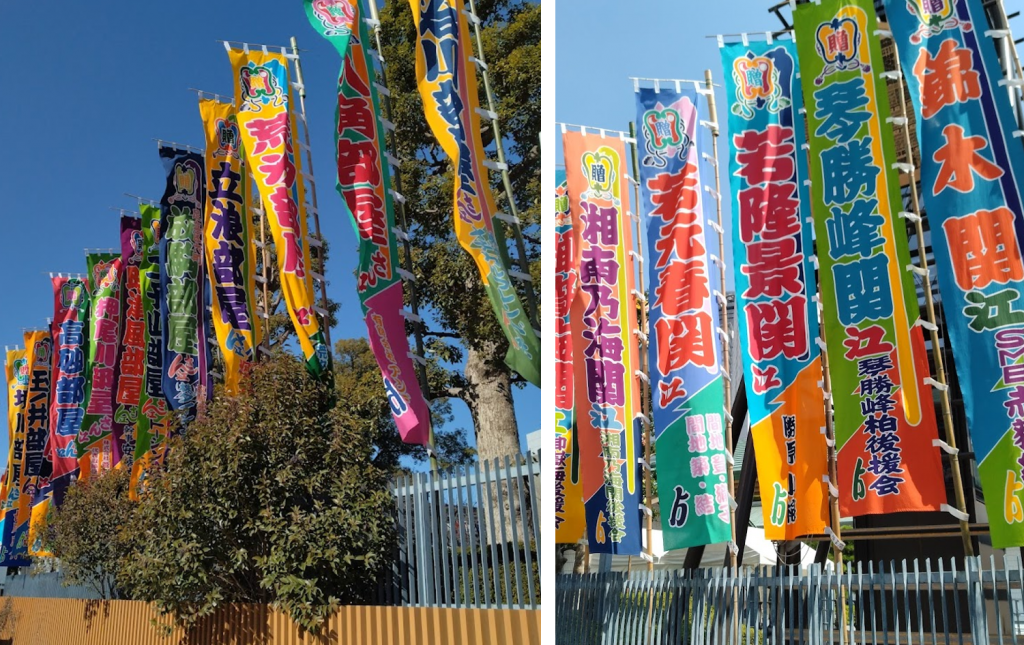
These colorful nobori banners are displayed in front of the Ryogoku Kokugikan during the Grand Sumo Tournament.
Among them are banners representing various sumo stables, including Arashio Stable, as well as banners featuring individual rikishi from Arashio Stable, such as Wakatakakage and Wakamotoharu.
Together, they create the lively atmosphere surrounding the Kokugikan during the tournament.
The Spirit and Tradition of Sumo
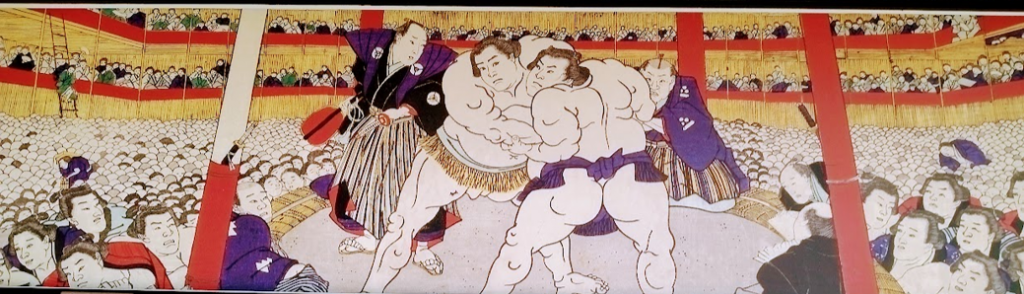
-the artwork above the ticket windows at Ryogoku Kokugikan-
Sumo is Japan’s national sport.
Six grand sumo tournaments are held each year in Tokyo, Osaka, Nagoya, and Fukuoka.
Ryogoku Kokugikan hosts three official tournaments annually — in January, May, and September. The matches are broadcast live throughout Japan.
Sumo wrestlers, known as rikishi, wear only a mawashi, symbolizing that they enter the ring unarmed and compete using only their own strength and spirit.
Before a match, rikishi throw salt into the ring to purify the dohyo. In sumo tradition, salt is believed to cleanse away impurity and evil spirits.
Another important ritual is shiko, in which wrestlers lift each leg high and stomp the ring. The powerful stomping is believed to drive evil spirits into the ground and ward off harmful forces that may bring illness or disaster.
Sumo is not just a sport — it is deeply connected to ancient rituals and traditions. Every movement around the dohyo has meaning.
The more you learn about sumo, the more you will discover the richness and depth of its culture.
* Cultural information about sumo traditions and rituals was referenced from official sumo and tourism materials.
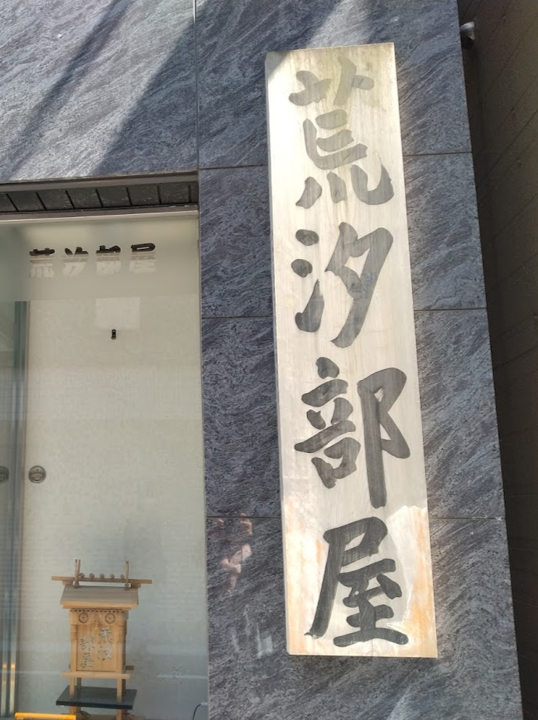
《Arashio Stable》
Address :2-47-2 Nihombashihamacho, Chuo City, Tokyo
Access : 3 min walk from Hamacho Station on the Toei Shinjuku Line/ 10 min walk from Ningyocho Station on the Tokyo Metro
*Please check the morning practice schedule on the official website of Arashio Stable
*Phone inquiries are not accepted.