 オフィシャル
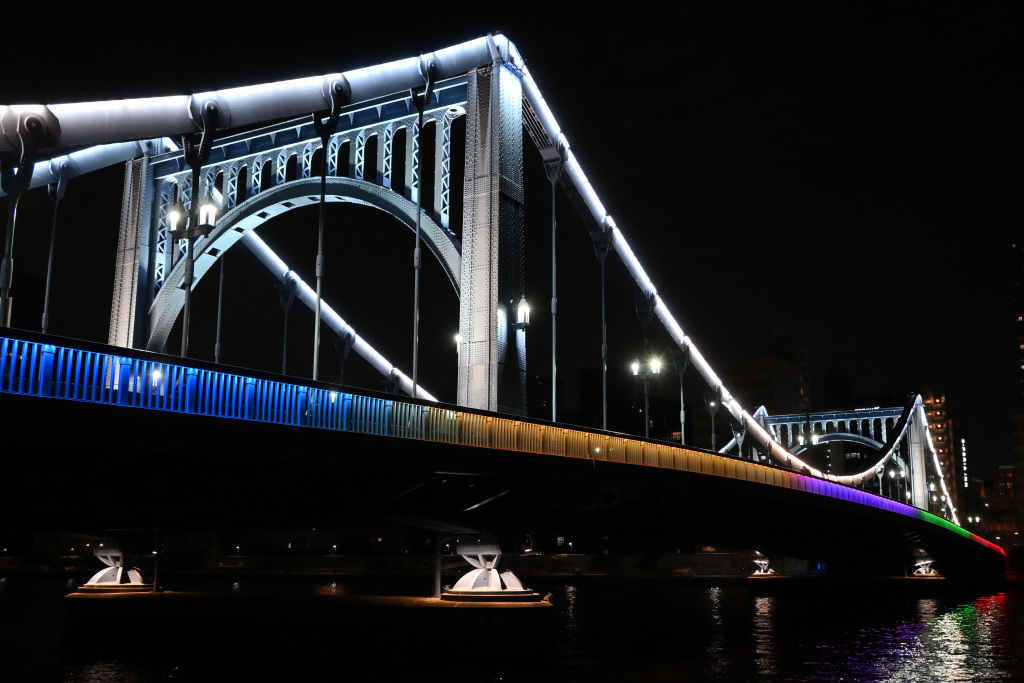
Bridges over the Sumida River Lit in Olympic Colors
To coincide with the Milano–Cortina 2026 Winter Olympics held in Italy in February 2026, several bridges spanning the Sumida River were illuminated in special Olympic colors. During the Games, many people must have noticed the vibrant lights. There is something truly wonderful about the way Tokyo and Italy felt connected in this way. Needless to say, the illuminations seemed even more beautiful than usual. Wishing to preserve a memory of the Olympics, I decided to introduce some of the bridges that were lit up for the occasion.
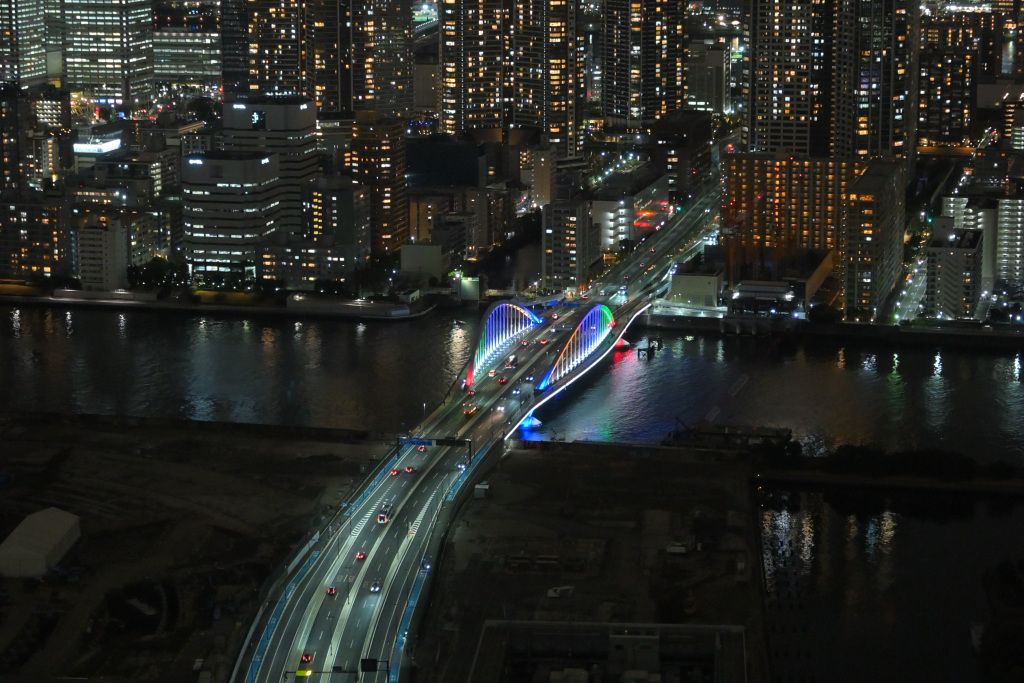
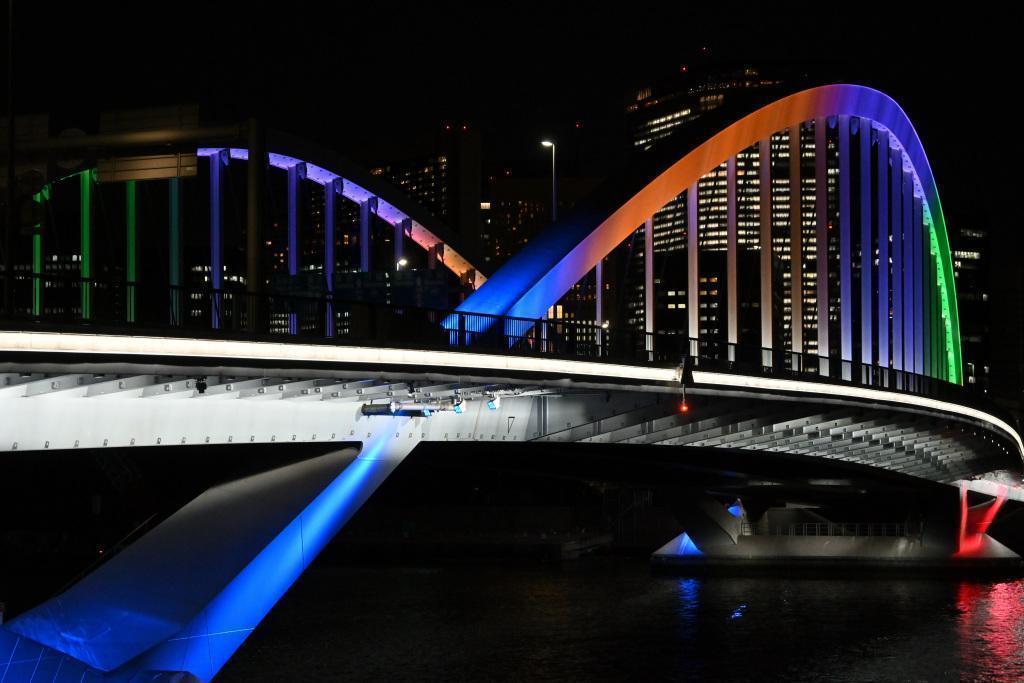
Tsukiji Ohashi Bridge
Opened in 2018, this is the newest bridge over the Sumida River, connecting Tsukiji and Kachidoki in Chuo Ward. Its wide sidewalks make it especially pleasant for walking, offering views toward Tokyo Bay and, beyond Hamarikyu Gardens, even Tokyo Tower. Looking down from the bridge at water buses and Yakatabune (Japanese houseboats) cruising along the river brings a different kind of enjoyment from the usual riverside perspective. On the Kachidoki side, there is a small observation space partway up the stairs, where you can enjoy views of Tsukiji Ohashi itself as well as the upstream Kachidoki Bridge.
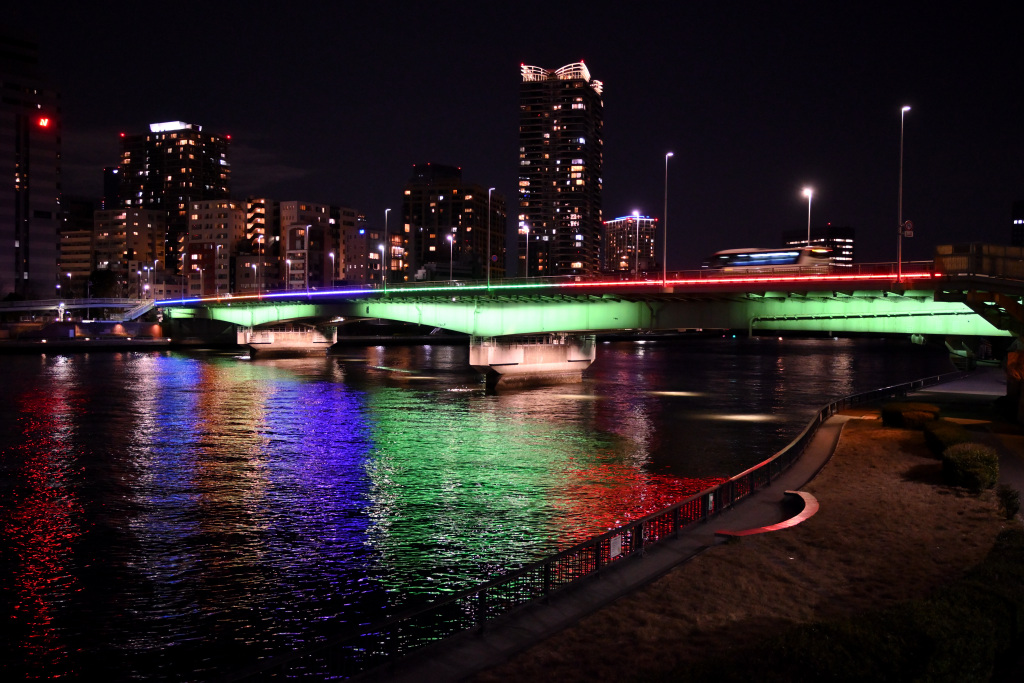
Tsukuda Ohashi Bridge
Completed in 1964, the year of the Tokyo Olympics, this bridge connects Minato and Tsukuda in Chuo Ward. In that sense, it may be said to have the closest ties to the Olympics among the Sumida River bridges. After crossing eastward, the northern area is Tsukuda, famous for tsukudani (small seafood or seaweed simmered in soy sauce). To the south lies Tsukishima, well known for monjayaki (a savory, slightly runny dish cooked on a hot griddle). Both tsukudani and monjayaki can be considered specialties that represent the culinary character of Chuo Ward.
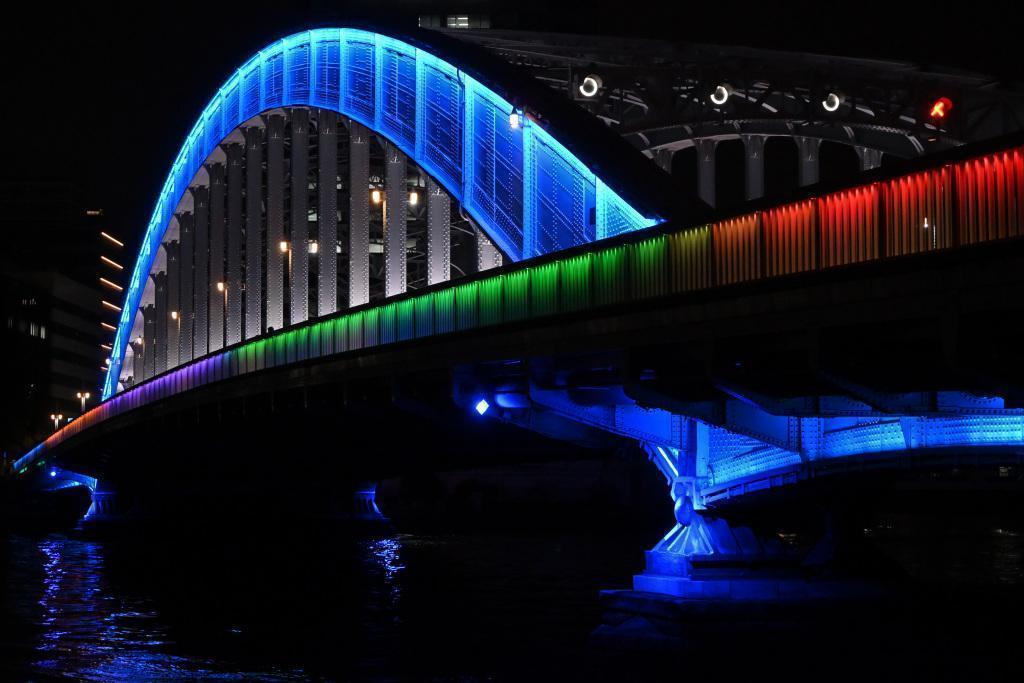
Eitai Bridge
This graceful blue steel arch bridge connects Shinkawa in Chuo Ward with Monzen-nakacho in Koto Ward. The current bridge was rebuilt as part of the post–Great Kanto Earthquake reconstruction efforts after its predecessor was damaged in 1923. Completed in 1926, it marks its 100th anniversary this year. Designated as an Important Cultural Property of Japan, it is one of the bridges that symbolize the Sumida River.
Kiyosu Bridge
Often spoken of as a counterpart to Eitai Bridge, this suspension bridge connects Nakasu in Chuo Ward with Kiyosumi in Koto Ward. It was planned alongside Eitai Bridge as part of the post-earthquake reconstruction projects and was completed in 1928. While Eitai Bridge is often described as powerful, Kiyosu Bridge is frequently praised for its beauty. Like Eitai Bridge, it is designated as an Important Cultural Property of Japan and stands as one of the iconic bridges over the Sumida River.
Conclusion
The Milano–Cortina Olympics have now come to a close, and with them, the bridges over the Sumida River have returned to their usual nighttime colors. With the festive lights gone, the river at night seems to have regained a certain quietness. Yet in March, the Milano–Cortina Paralympics will follow. Perhaps the bridges will once again be illuminated in special colors for the occasion—at least, that is my hope.