 オフィシャル
Tsukuda — Echoes of Edo in a Corner of Tokyo
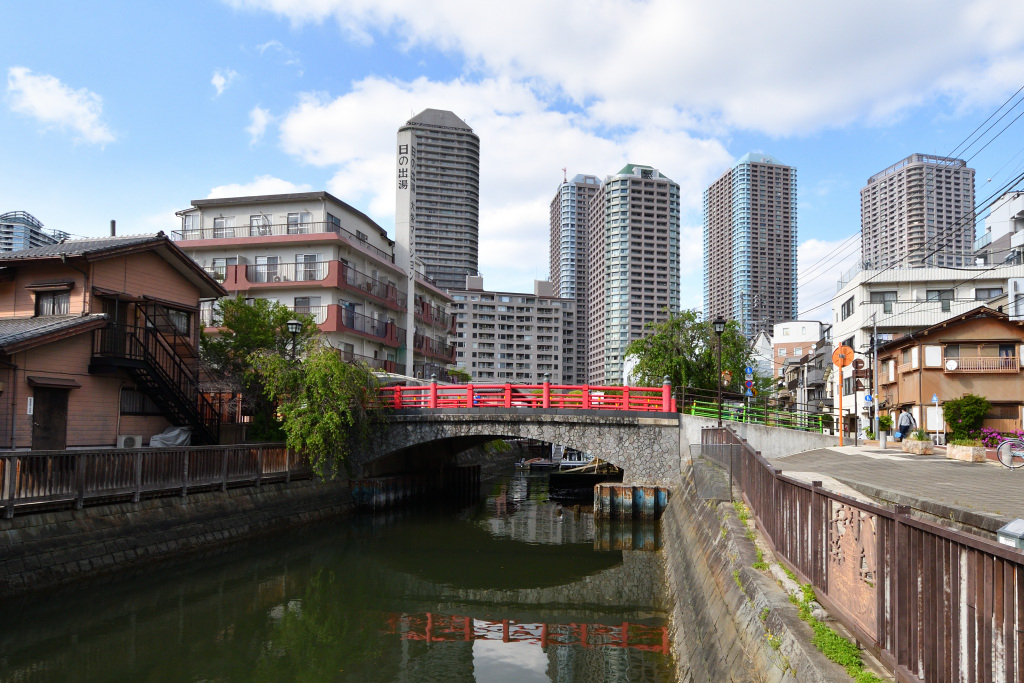
When people hear the name Chuo Ward, many probably think of Nihonbashi or Ginza.
Nihonbashi, lined with long-established department stores; Ginza, home to world-famous luxury boutiques. Chuo Ward is truly at the heart of Tokyo, and one of the places that symbolizes Tokyo as a global metropolis.
Yet at the same time, if you step just a little away from the city center, you can still find neighborhoods that retain the atmosphere of Tokyo’s old downtown districts. Tsukuda is one such place.
This small neighborhood, located near the mouth of the Sumida River, still preserves traces of Edo-era history alongside scenes of quiet everyday life.
Sumiyoshi Shrine
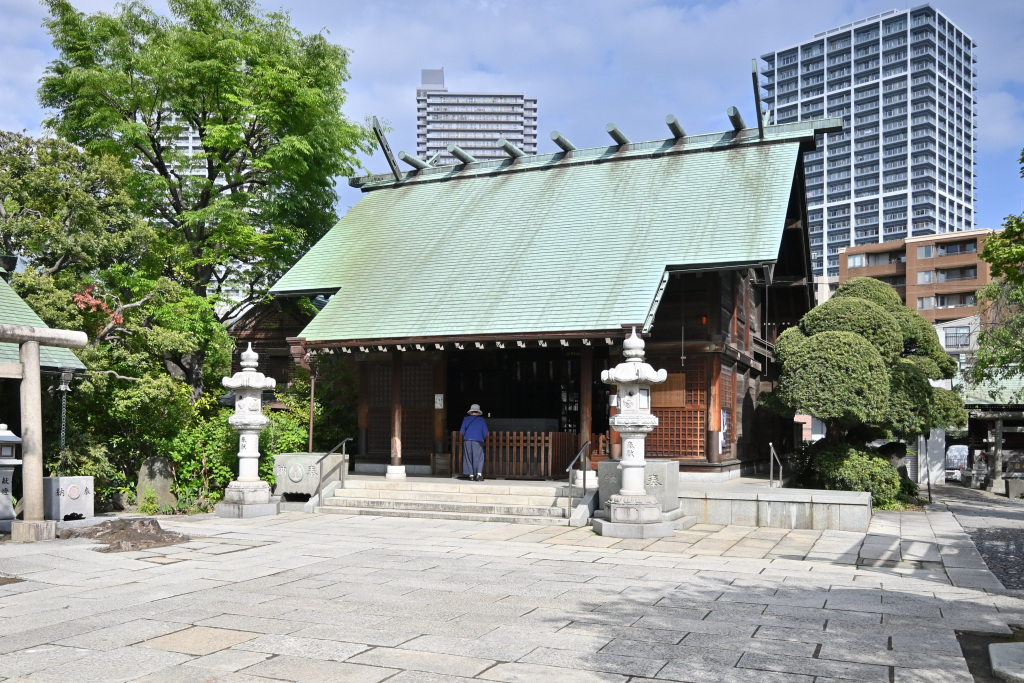
No discussion of Tsukuda’s history would be complete without mentioning Sumiyoshi Shrine.
In the early Edo period, fishermen from Tsukuda Village in Settsu Province (present-day Tsukuda, Nishiyodogawa Ward, Osaka) were relocated to Edo by order of Tokugawa Ieyasu. They reclaimed the land granted to them by the shogunate, created an island, and are said to have given it the same name as their hometown: “Tsukuda.”
Sumiyoshi Shrine was established in 1646 by transferring a branch of Tanominojima Shrine (later known as Sumiyoshi Shrine, now Tanomino Shrine) from the original Tsukuda Village in Settsu Province to its present location.
Ceramic Shrine Plaque
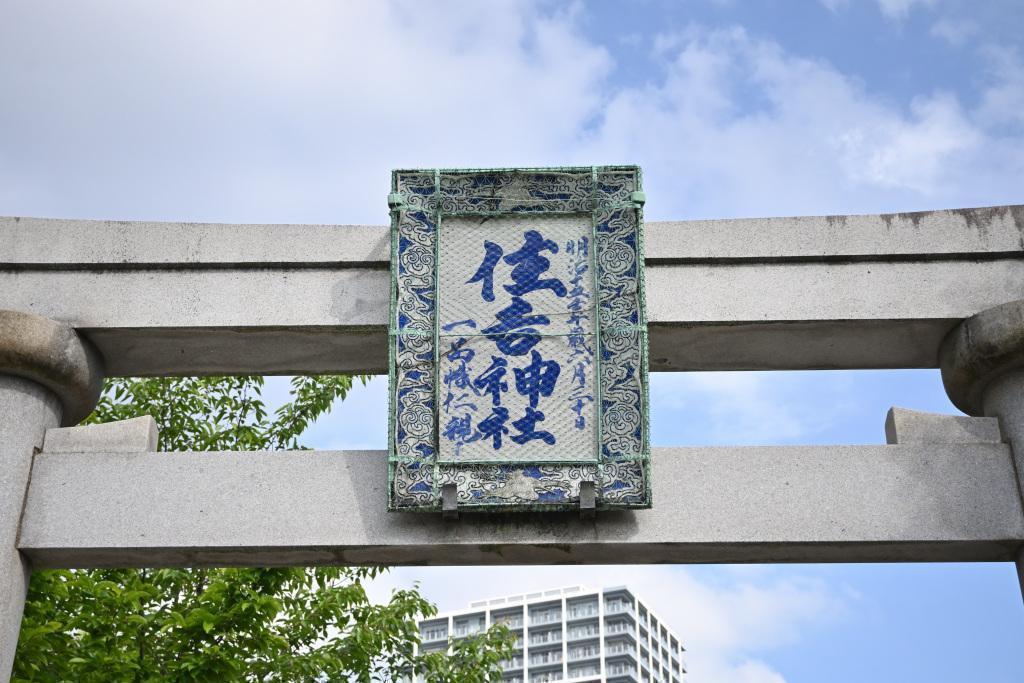
A ceramic shrine plaque hangs on the stone torii gate of the shrine.
Since shrine plaques are usually made of wood, this ceramic example is considered quite unusual.
Omizuya (Purification Pavilion)
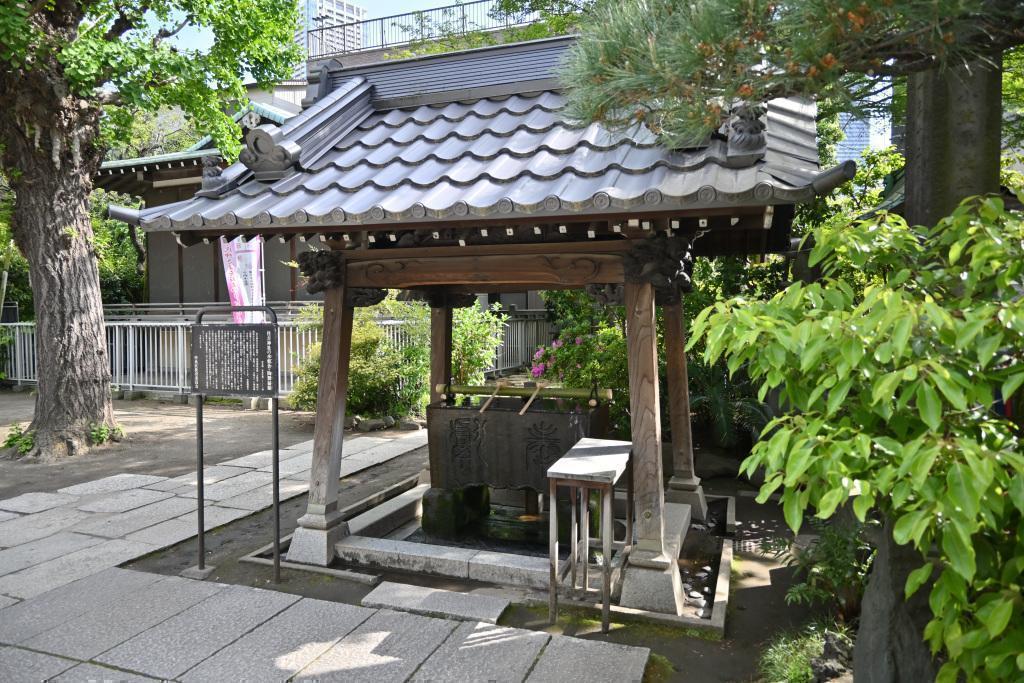
The omizuya, or purification pavilion, is especially well known for its remarkable relief carvings on the transom panels.
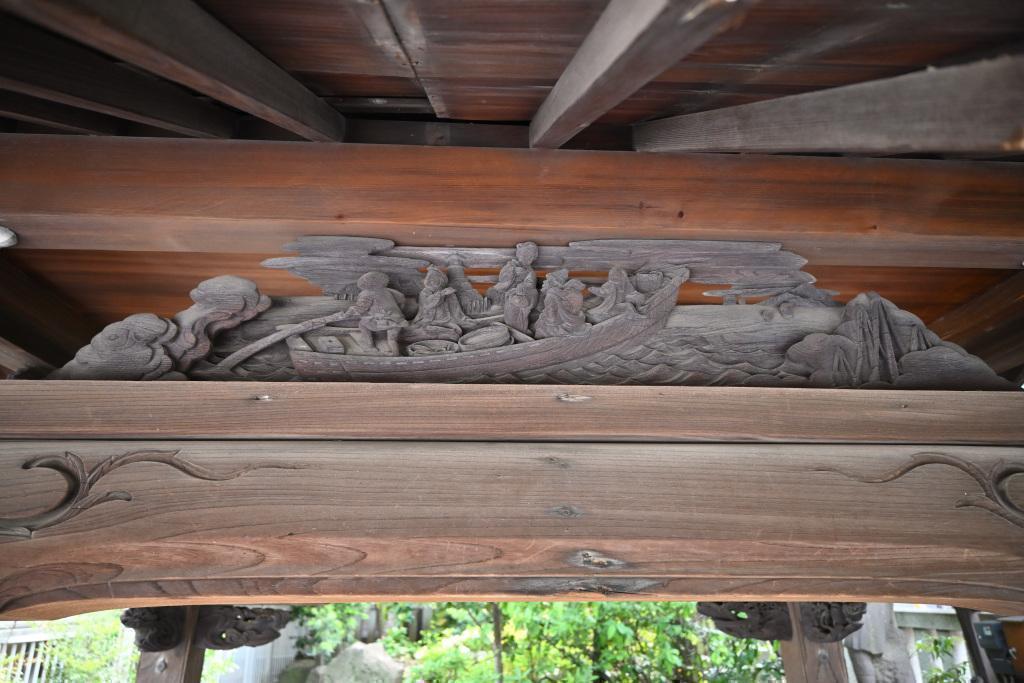
The front panel, shown in the picture above, depicts the Ishikawajima lighthouse and the Tsukuda ferry crossing. The side panels show cargo boats under sail and small fishing boats casting nets. The back panel portrays coastal scenery. Together, these carvings beautifully capture scenes from old Tsukuda-island.
The stone water basin placed at the center was donated in 1841 by the Shirako-gumi, a guild of cotton merchants.
Tsukuda Kobashi Bridge
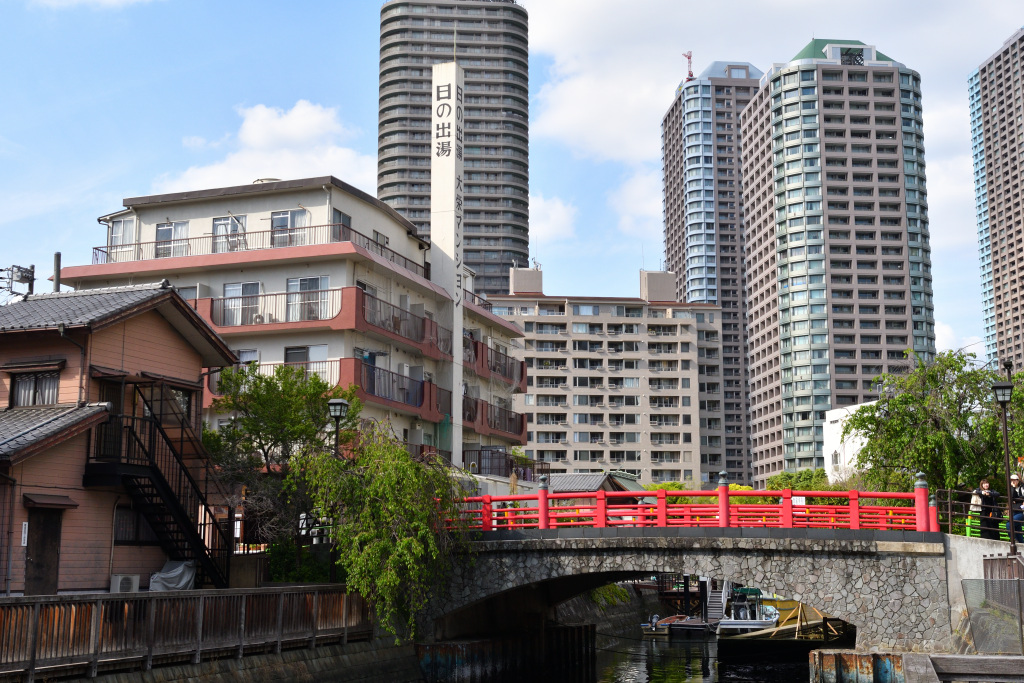
The vermilion-colored Tsukuda Kobashi Bridge, located near Sumiyoshi Shrine, is one of the iconic sights of Tsukuda.
Today, the southern side of Tsukuda is connected by land to the neighboring Tsukishima district. However, canals branching from the Sumida River still remain on the north and east sides, preserving the memory of the days when this area was truly an island.
Beside the bridge stands Hinodeyu, one of only seven remaining public bathhouses in Chuo Ward.
Beneath the riverbed under Tsukuda Kobashi lie the large wooden poles used for the giant festival banners carried during the main festival of Sumiyoshi Shrine. By storing them underwater, they are protected from decay.
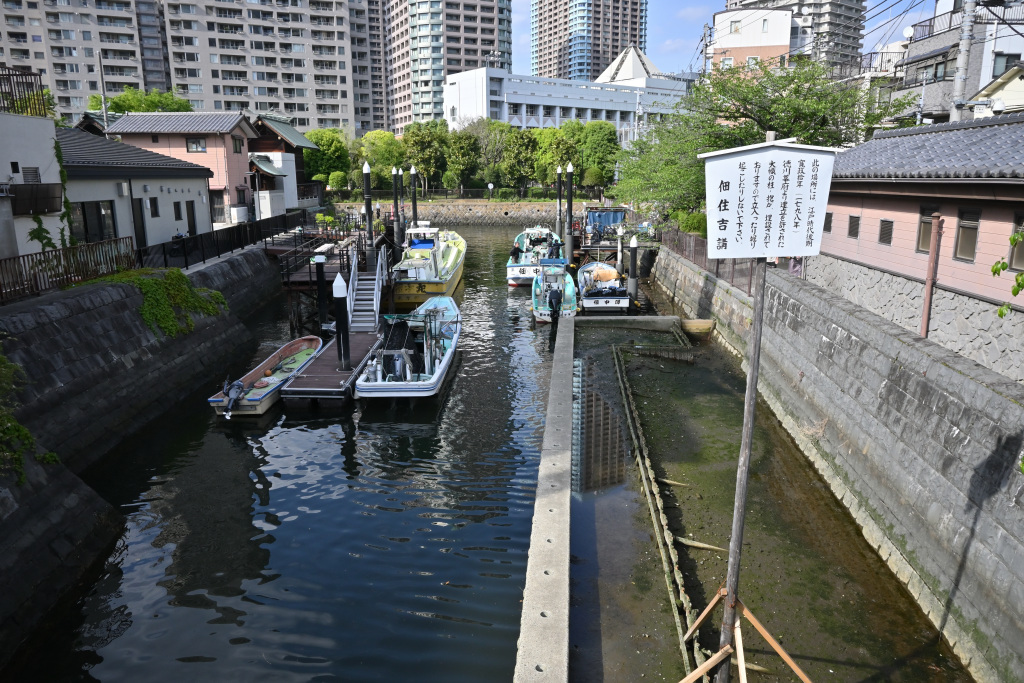
The place where the giant festival banner poles are stored beneath the riverbed
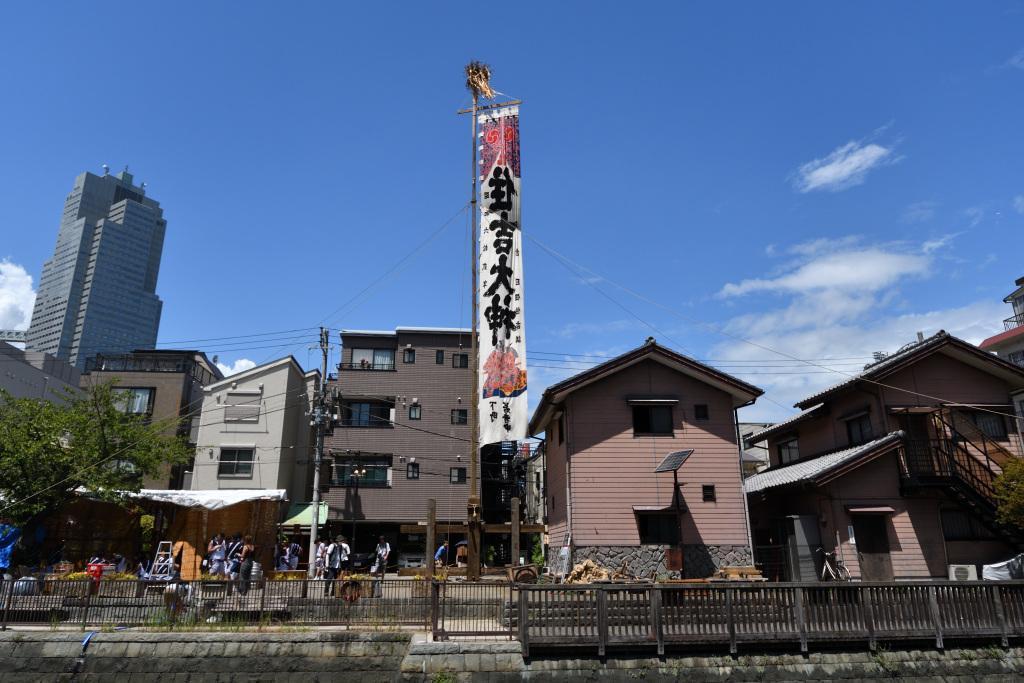
Giant festival banners
(Photographed during the previous festival in 2023)
Tsukuda Namiyoke Inari Shrine
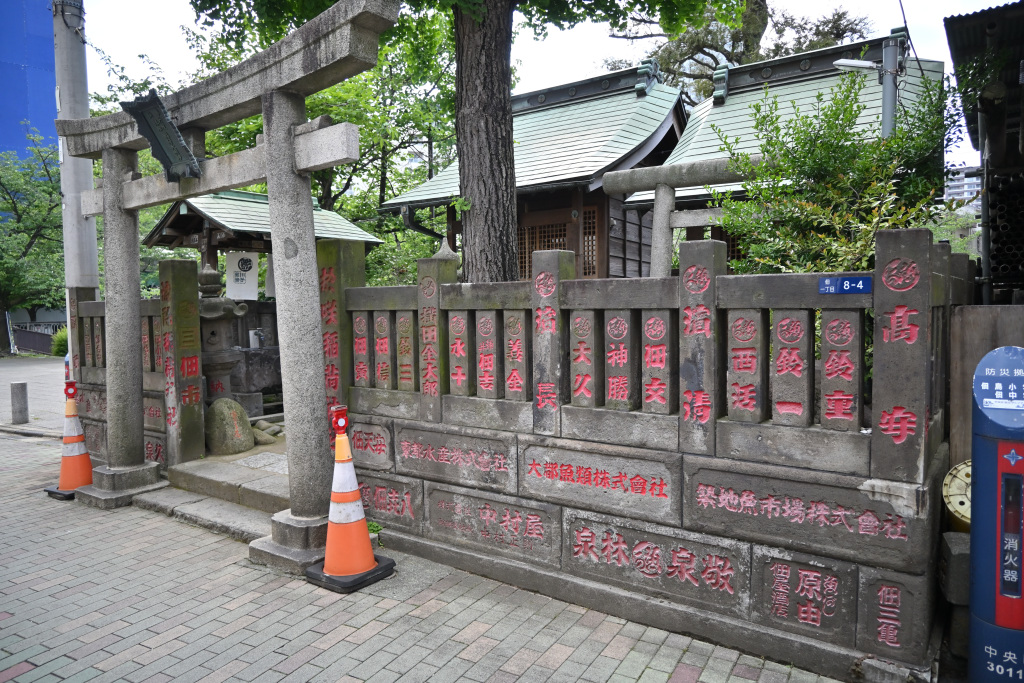
Across Tsukuda Kobashi Bridge, on the opposite side from Sumiyoshi Shrine, stands Tsukuda Namiyoke Inari Shrine.
Although smaller than Sumiyoshi Shrine, the names carved into the stone fence — many believed to belong to people connected with the fishing industry — reveal how deeply rooted the shrine has long been in the local community.
Sashi-ishi (Lifting Stones)
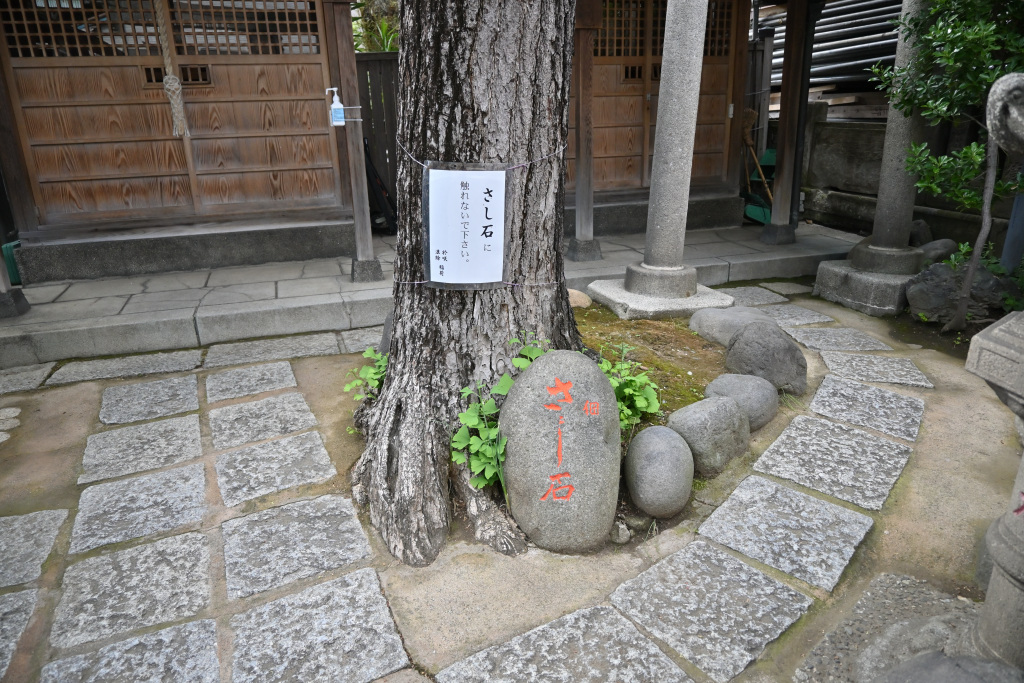
Another fascinating feature of the shrine grounds is the set of three “sashi-ishi,” or lifting stones.
These stones were once used by Tsukuda fishermen to test their strength by lifting them. This custom is said to have continued until around the time of the Great Kanto Earthquake, roughly a century ago.
Conclusion
To the north of Tsukuda lies Ishikawajima, where rows of high-rise apartment towers create a strikingly modern Tokyo skyline. In contrast, Tsukuda still retains much of its traditional downtown atmosphere, creating a vivid contrast between old and new. Skyscrapers and narrow alleys. A modern metropolis and lingering traces of Edo. Perhaps the greatest charm of Tsukuda lies in the way these contrasting worlds exist side by side.
A short walk to the south will also bring you to Tsukishima’s famous Monja Street. After strolling through Tsukuda, trying monjayaki — a runnier cousin of okonomiyaki — is also highly recommended.
Access
A short walk from Tsukishima Station on the Tokyo Metro Yurakucho Line and the Toei Oedo Line.