 オフィシャル
“Tsutaju Gallery” – A Small Ukiyo-e Exhibition that Brings Edo Culture to Life
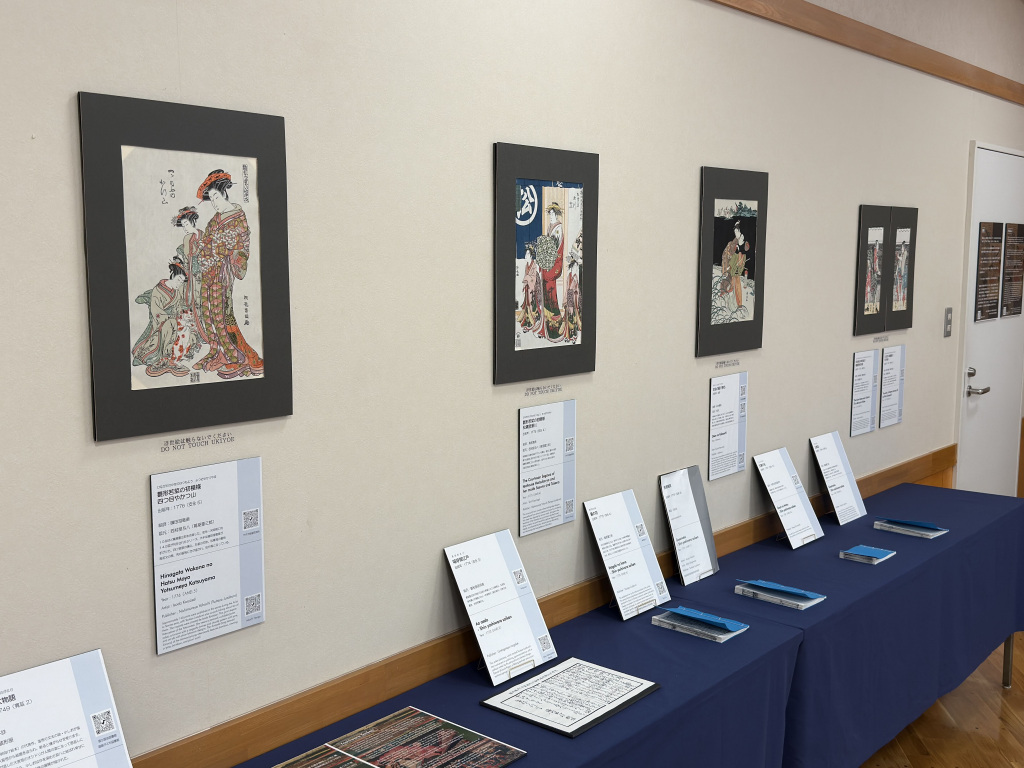
If you’re interested in Japanese culture, why not visit the Tsutaju Gallery, currently open at Jisshii Square in Kodemmacho, Chuo City, Tokyo? This small exhibition offers a rare chance to view authentic ukiyo-e prints for free. Whether you're staying nearby during your travels or live in the area, it’s a wonderful opportunity to experience a piece of Japan’s cultural heritage.
What is the Tsutaju Gallery?
This exhibition showcases materials related to Tsutaya Juzaburo, a renowned publisher (called a hanmoto in the Edo period) who played a major role in shaping Edo-period art and literature. He is the central figure of the ongoing NHK historical drama "Berabo" and is known for discovering and promoting many famous talents of the time.
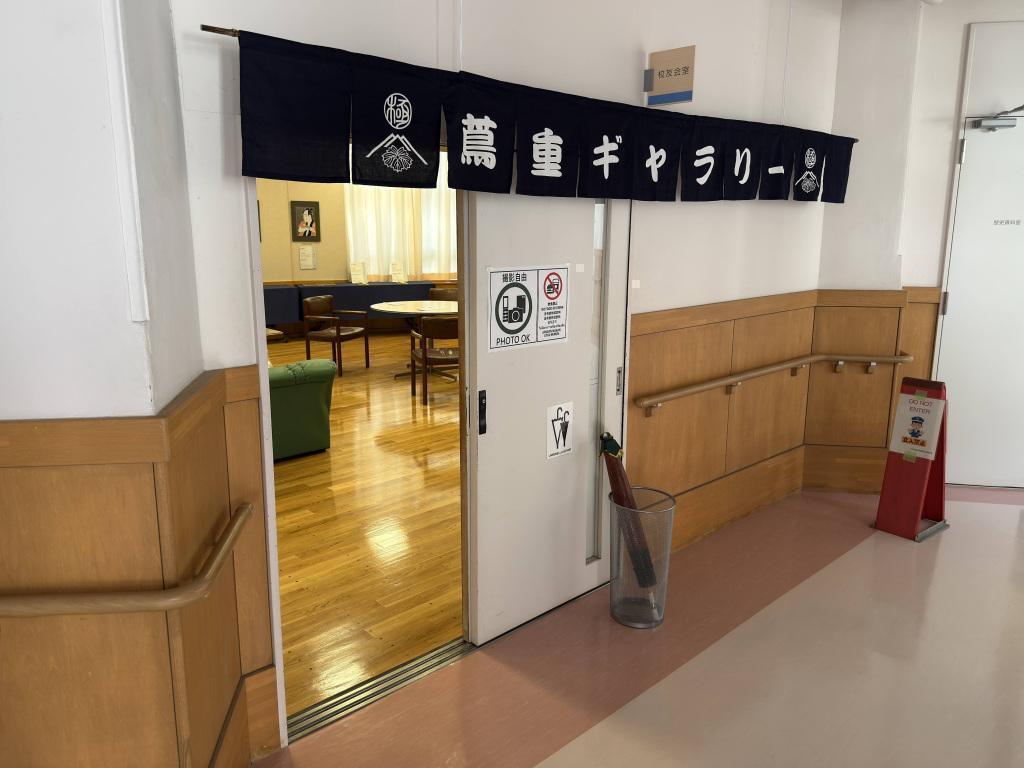
Entrance to the Tsutaju Gallery.
The curtain (noren) reads “Tsutaju Gallery” in Japanese. The mark on the left is the family crest of Tsutaya. (The noren is a traditional Japanese fabric divider often used at shop entrances.)
About the Venue
The gallery is located in Jisshii Square, a public cultural facility that once served as an elementary school. Tsutaya began his career in Yoshiwara (the licensed pleasure district north of Asakusa) and later opened a bookstore in Nihonbashi—establishing a strong historical link with Chuo Ward, where the exhibition is now held.
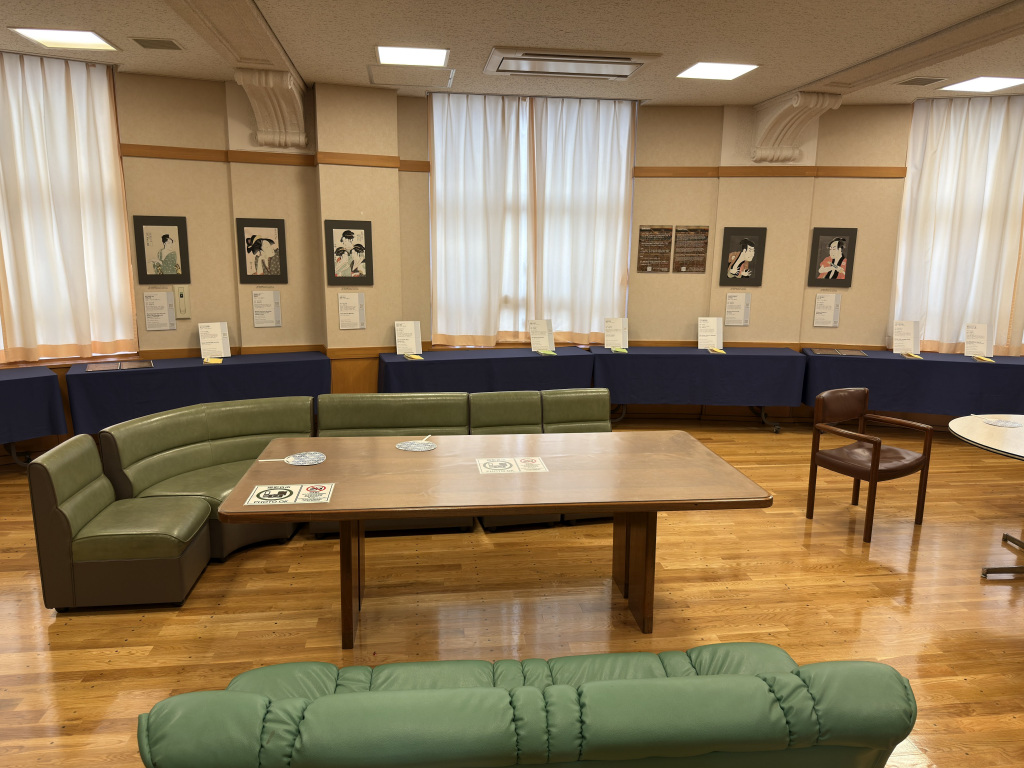
The exhibition held in Jisshii Square, a former elementary school building.
Who was Tsutaya Juzaburo?
Though his name may not have been widely known until recently, the artists he published—such as Kitagawa Utamaro and Toshusai Sharaku—are world-famous today. As a visionary publisher and cultural producer, Tsutaya helped define the aesthetics of his era. Without him, the world may never have seen some of Japan’s most iconic artworks. He also published popular fiction, and in that sense, he may have helped lay the groundwork for what would later develop into Japan’s manga and popular publishing culture.
Highlights of the Exhibition
Personally, I find the display of reprinted ukiyo-e by the Adachi Institute of Woodcut Prints to be the most striking part of the exhibition. Ukiyo-e, to put it simply, are multicolored woodblock prints. The more you print from a woodblock, the more it wears down—the fine lines start to blur. And original ukiyo-e prints from the Edo period often show signs of aging: the colors fade, and stains or damage appear over time. While these antique prints hold great historical value, I don’t believe they are always ideal for visual appreciation. In contrast, the Adachi Institute’s works are ukiyo-e revived in the present age, created using the exact same techniques as in the Edo period. Skilled artisans print each one by hand, carefully using clean, undamaged woodblocks. These are ukiyo-e prints newly born through traditional methods in modern hands. That’s why the colors and lines are vivid, crisp, and truly impressive. They may be reprints, but I believe they are authentic ukiyo-e. The number of works on display may not be large, but the chance to view so many familiar and iconic prints all at once is truly a special experience.
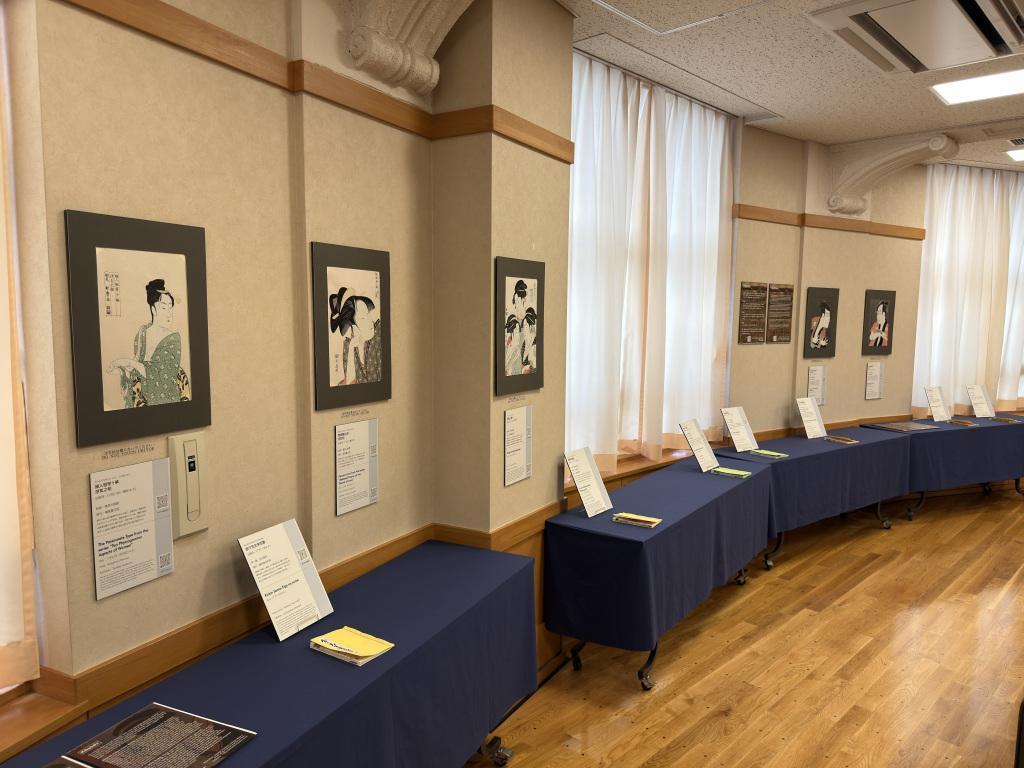
Masterpieces of ukiyo-e: Kitagawa Utamaro (the three on the left) and Toshusai Sharaku (the two on the right).
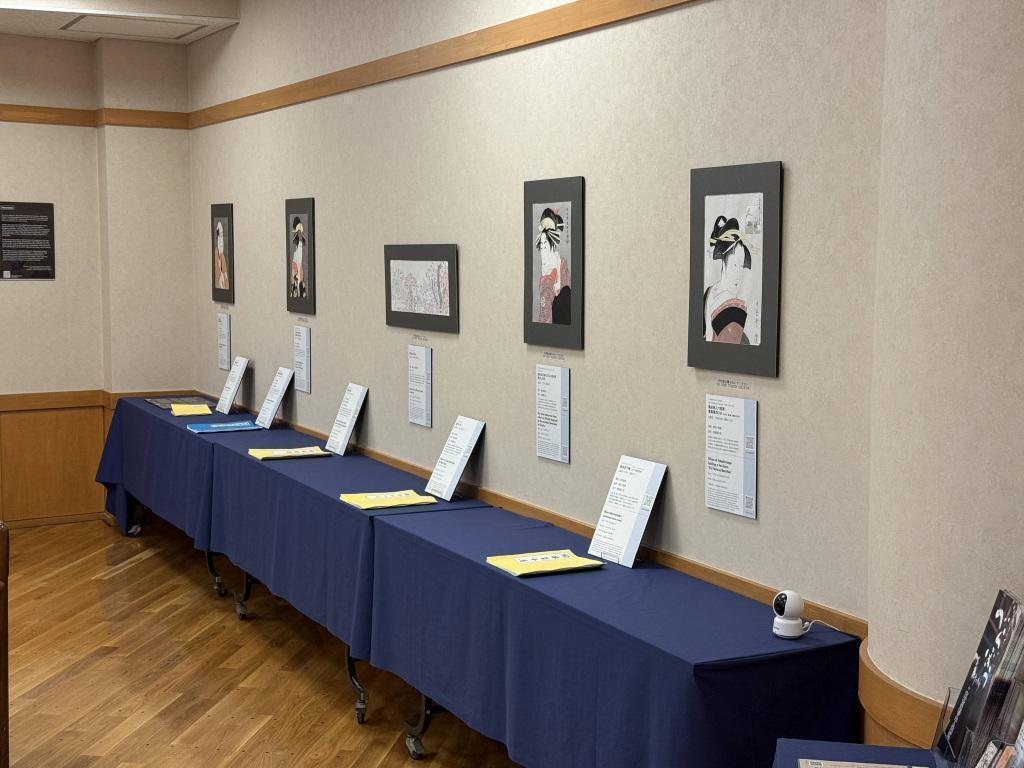
Toshusai Sharaku (the two on the left and the second from the right), Katsushika Hokusai (center), and Kitagawa Utamaro (right). A rare opportunity to view these iconic works all in one place.
You can also see replicas of books published under Tsutaya’s name, which visitors are welcome to touch and leaf through. This hands-on experience offers a rare tactile connection to the Edo period—something digital screens simply can’t replicate.
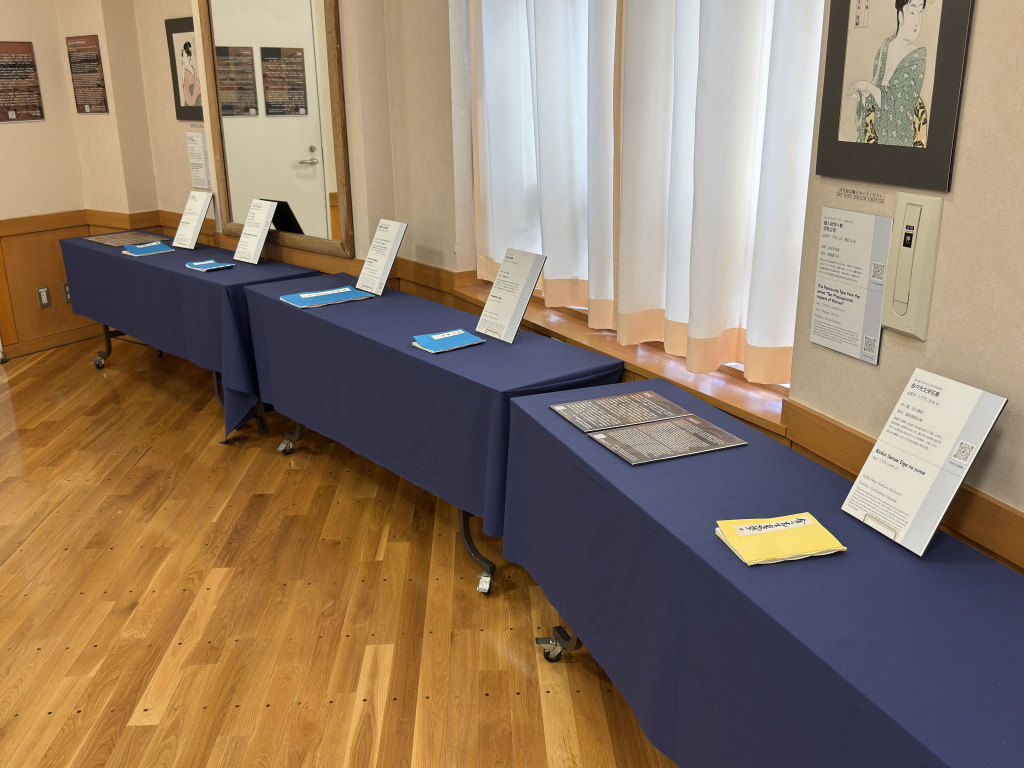
Reproductions of numerous books published by Tsutaya.
In Closing
It’s a small exhibition. However, the content is rich and well-curated, and I can confidently recommend it. If you happen to be in the area, why not stop by?
Exhibition Information – Tsutaju Gallery
Location: Koyukai Room, 2nd Floor, Jisshii Square
Address: 5-1 Nihonbashi Kodemmacho, Chuo-ku, Tokyo
Exhibition Period: May 1, 2025 – Mid-March 2026
Hours: Monday to Saturday, 10:00 a.m. – 5:00 p.m.
Closed: Sundays and National Holidays
Admission: Free