 オフィシャル
Moon Viewing at Hama-rikyu Gardens on an Autumn Night
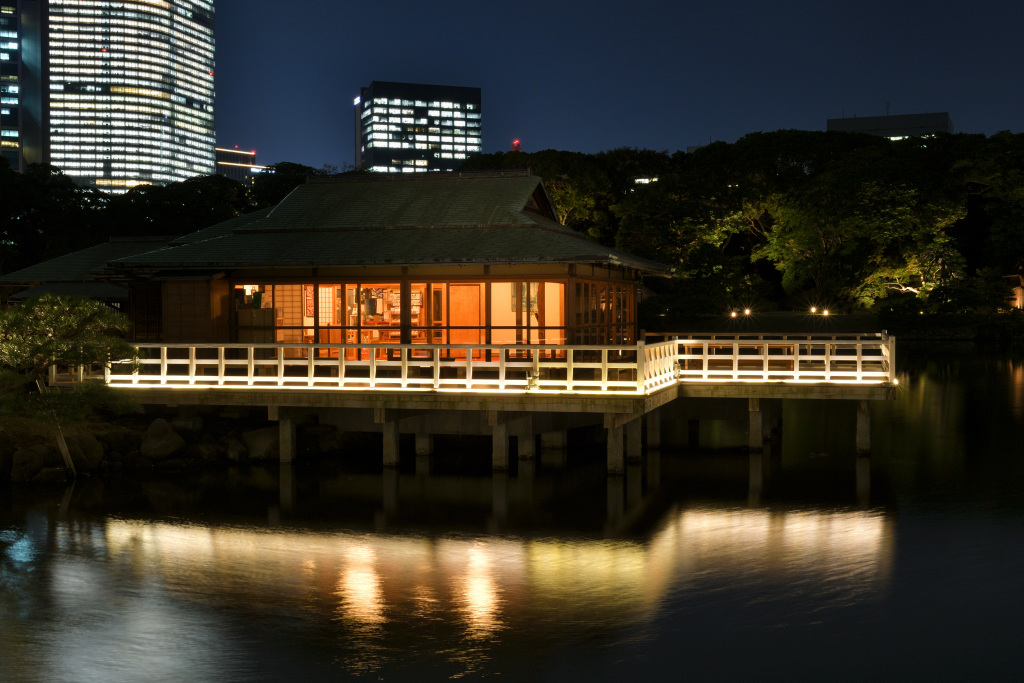
As autumn deepens, the moon shining in the night sky appears even more beautiful. At Hama-rikyu Gardens, a historic Japanese garden in central Tokyo, a special event to enjoy the moon is held from Friday, October 31 to Wednesday, November 5, during which the garden is open until 9:00 p.m. I had the opportunity to attend a preview of the event, so in this post, I would like to share my experience and the charm of Hama-rikyu at night.
An Introduction to Hama-rikyu Gardens
Hama-rikyu Gardens is a historic Japanese garden located in Chuo Ward, Tokyo. It was originally built as a villa for the shogun family during the Edo period and later served as an imperial retreat after the Meiji Restoration. Today, it is open to the public, offering a rare chance to enjoy both natural beauty and historical atmosphere right in the heart of the city. Its proximity to Ginza and Tsukiji makes it easy to include in a Tokyo sightseeing itinerary.
The Moon Viewing Tradition at Hama-rikyu
Japan has a long tradition of admiring the moon. Among these, the moon of the “fifteenth night” (Jugoya) is especially celebrated. Even today, people decorate with pampas grass and rice dumplings to enjoy the moon. The “fifteenth night” refers to August 15 of the old lunar calendar, which is based on the phases of the moon. In 2025, according to the modern solar-based calendar, the fifteenth night falls on October 6.
Historically, the thirteenth night (Jusanya), about one month after the fifteenth night, was also considered particularly beautiful. In 2025, it falls on November 2. While the tradition of enjoying the thirteenth night has mostly faded in modern times, people in the past believed that viewing only the fifteenth night was unlucky—a practice called “katamizuki” (partial moon viewing). They would admire both the fifteenth and thirteenth night moons for a complete and auspicious experience.
The Hama-rikyu event focuses on enjoying the thirteenth night moon, allowing visitors to experience this traditional moon-viewing custom in the garden at night.
Welcomed by a Whale
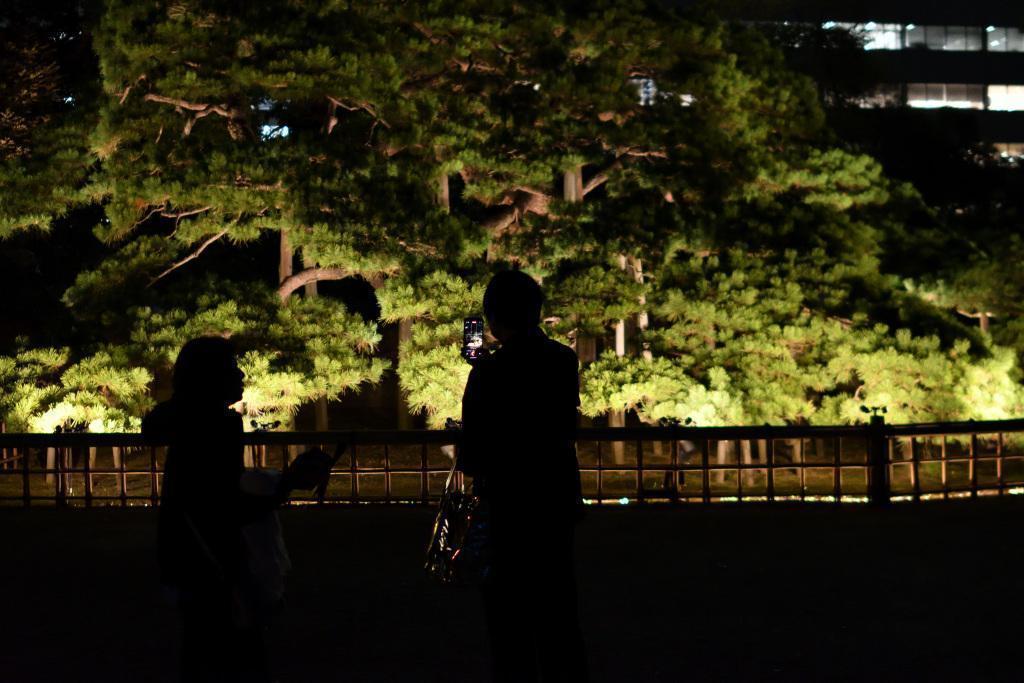
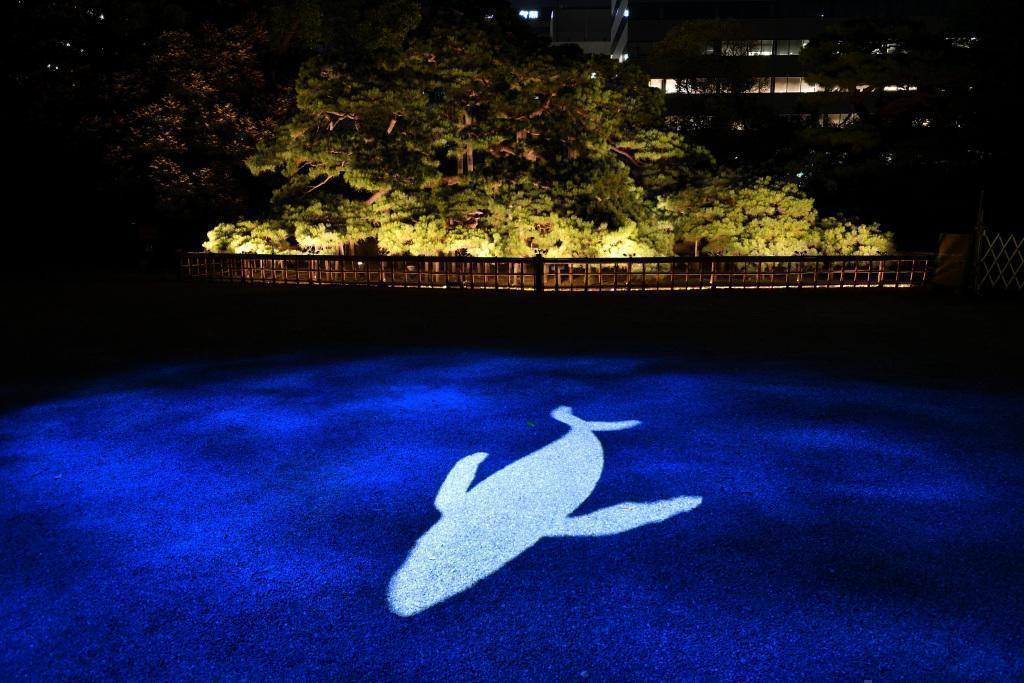
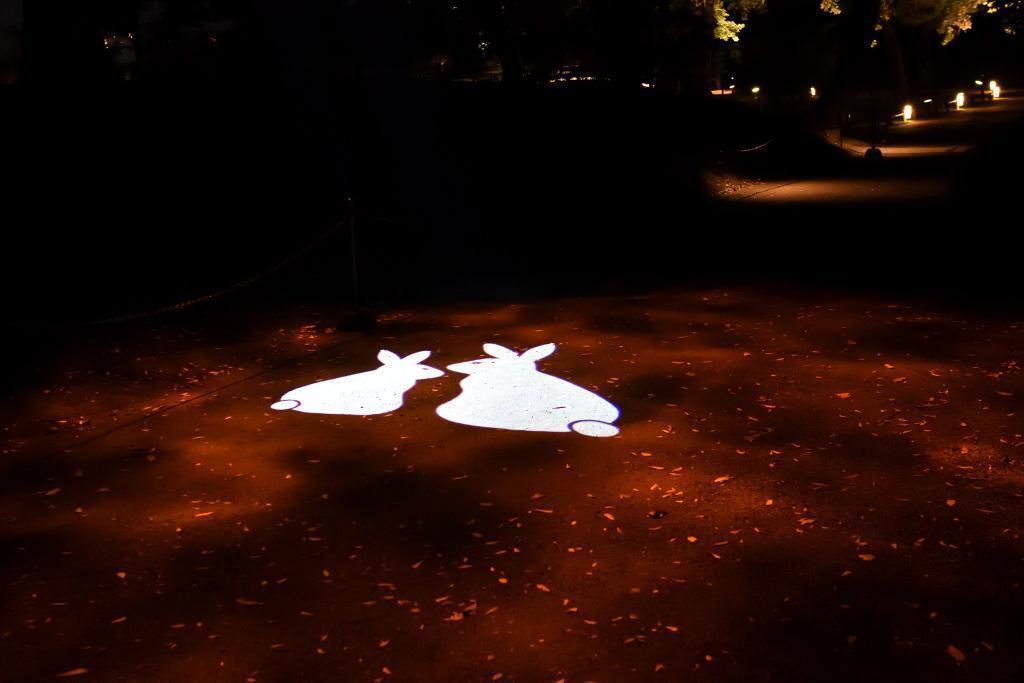
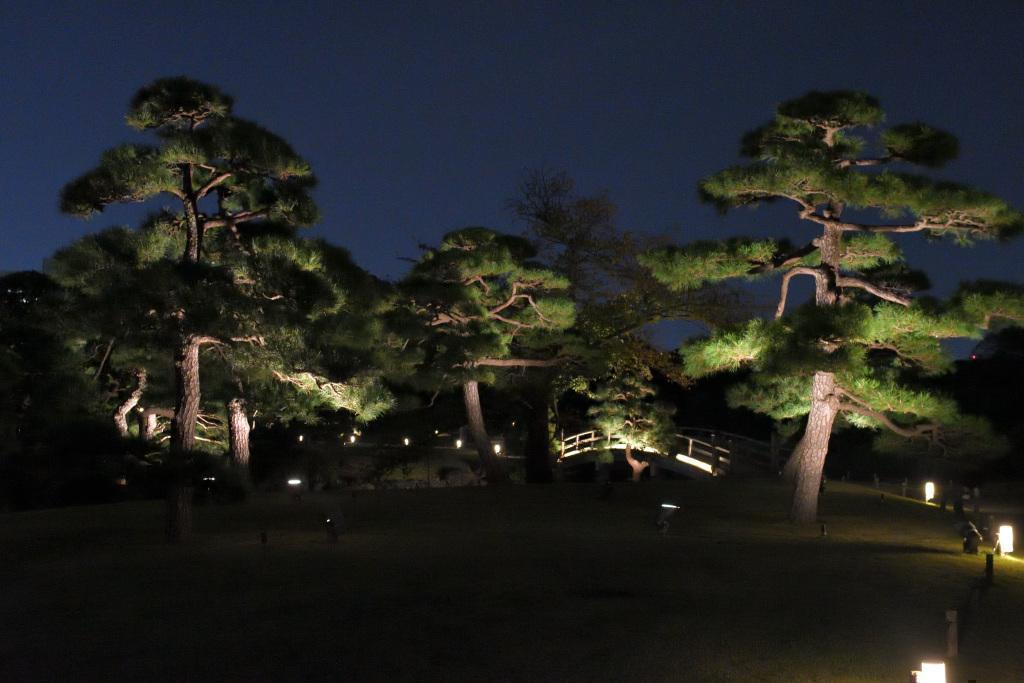
After entering through the Otemon Gate just past 5:30 p.m., we were greeted in front of the 300-year-Old Pine Tree by a whale created through projection mapping. This whale is inspired by a historic story in which a whale that had wandered into Tokyo Bay was brought to Hama-rikyu to show the shogun. From the very beginning, this exciting display set the tone for the evening.
Walking Toward the Tidal Pond
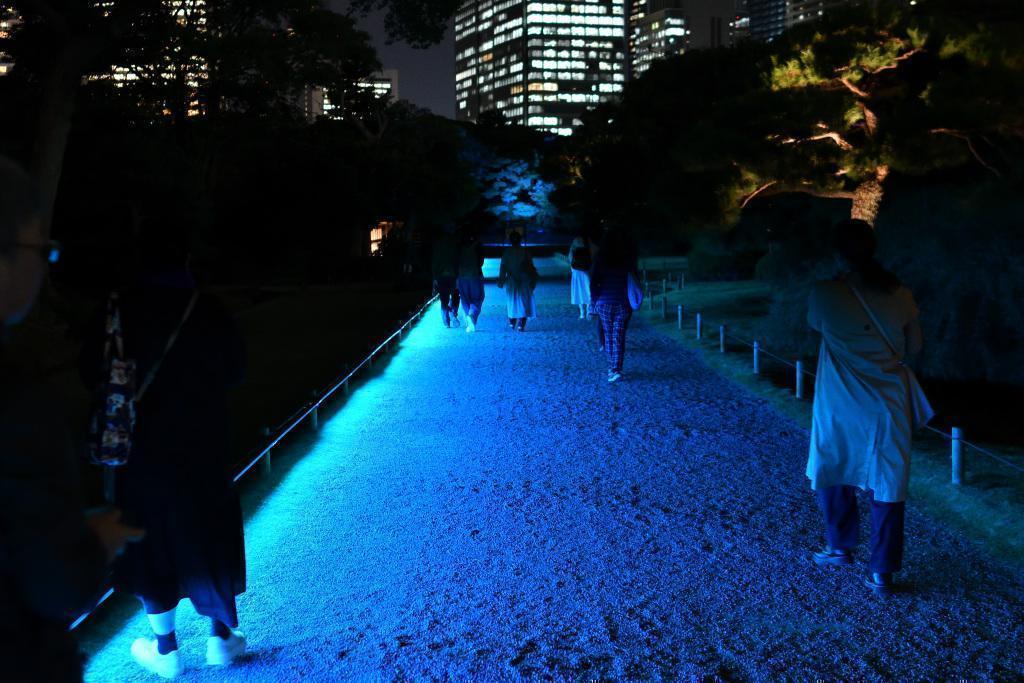
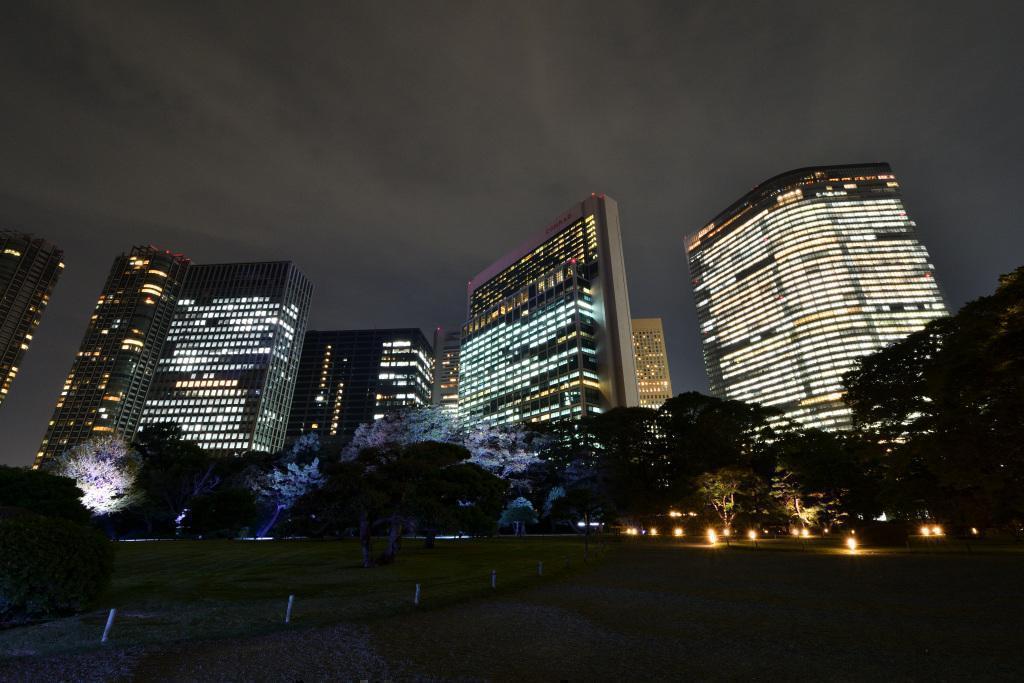
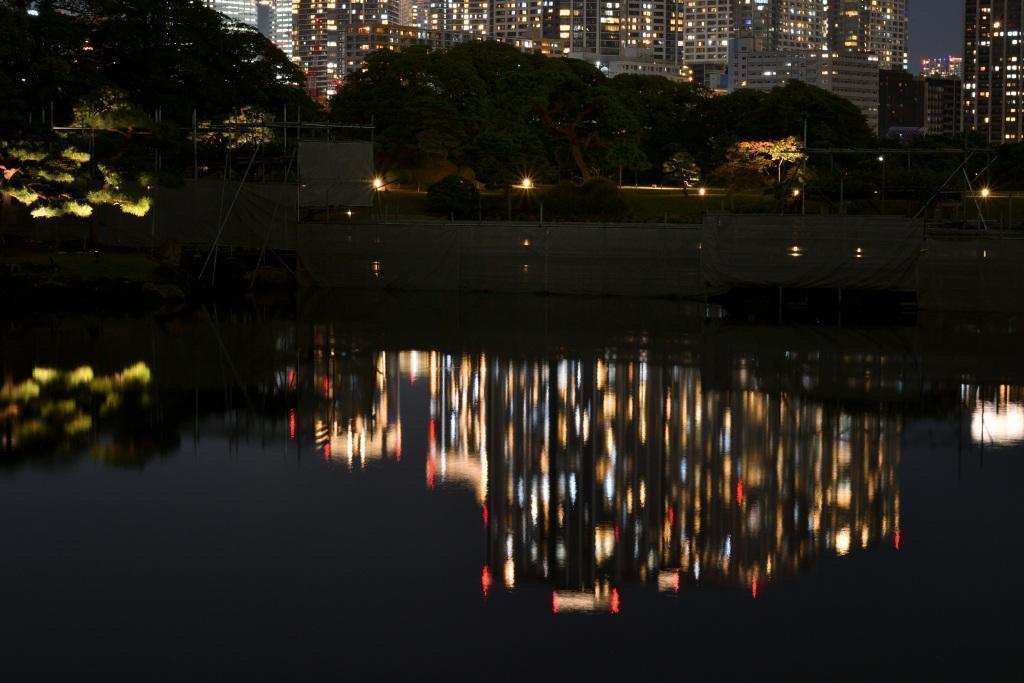
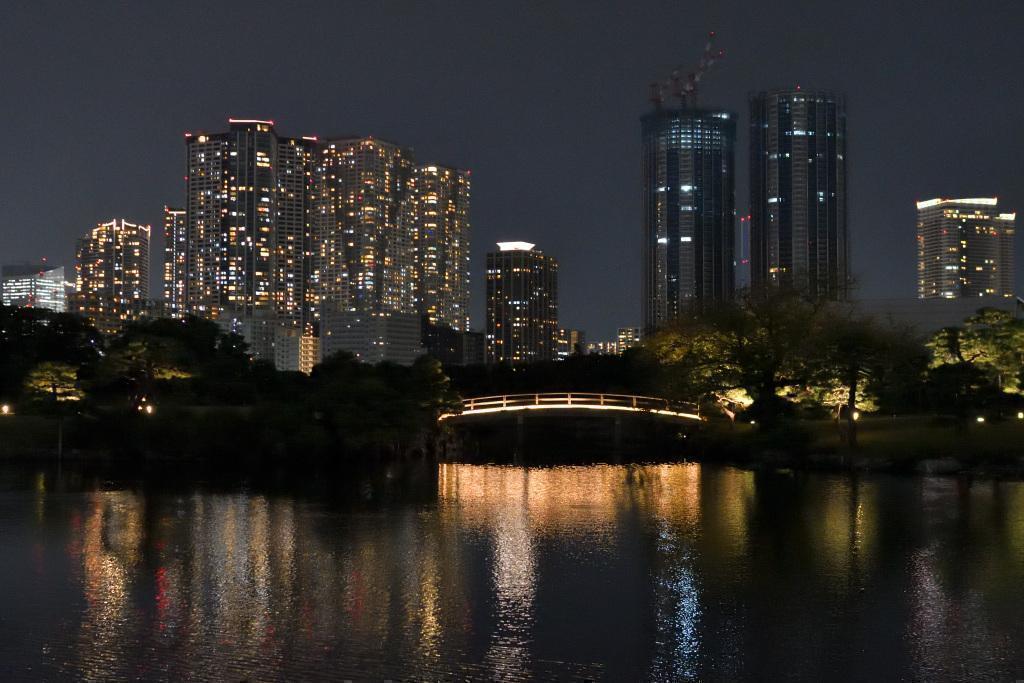
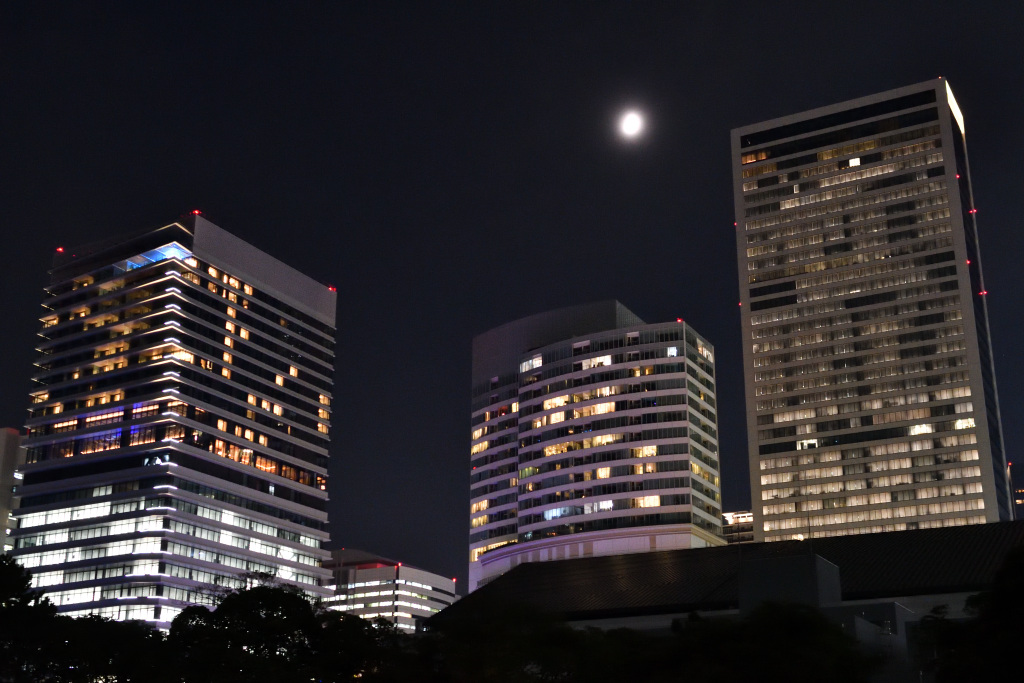
After saying goodbye to the whale, we followed the illuminated path toward the tidal pond. According to the staff, the lighting is designed not to interfere with the moon-viewing experience. Indeed, it was subtle and calming rather than overly bright. Looking up from the garden, the lights of the Shiodome skyscrapers created a beautiful backdrop.
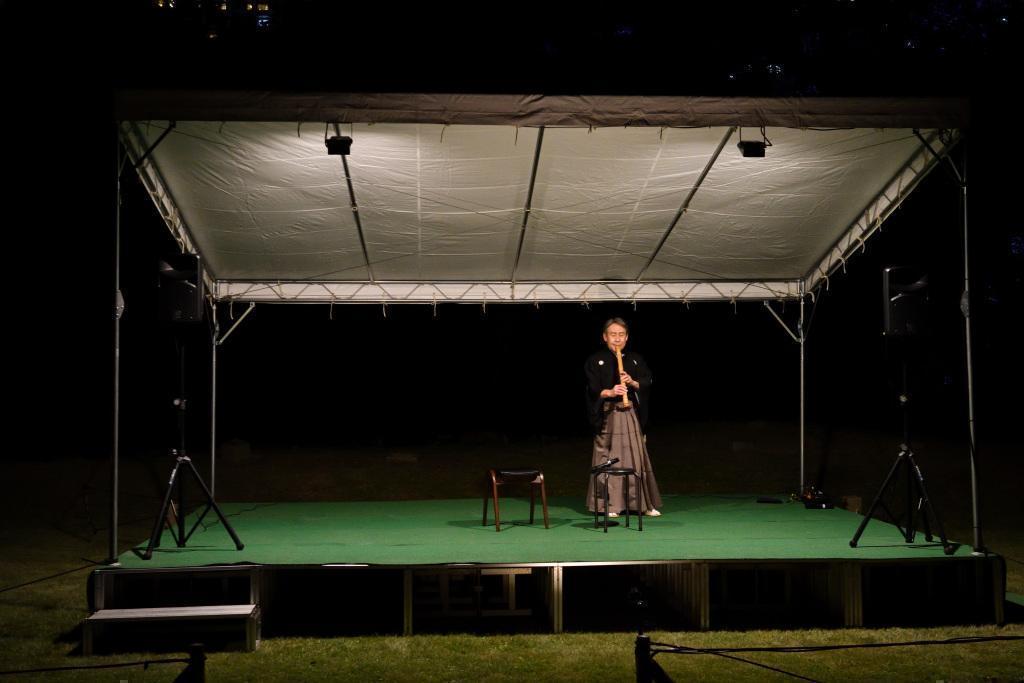
Along the way, a stage was set up for performances of traditional Japanese instruments during the moon-viewing period. On the day I visited, a careful rehearsal was taking place.
Arriving at the Tidal Pond
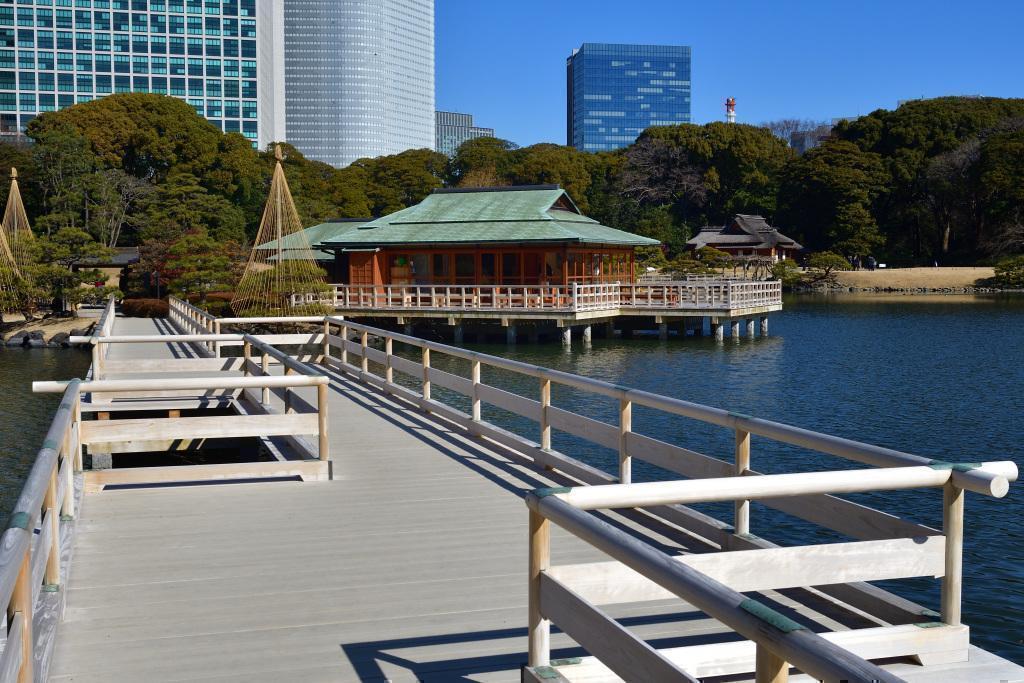
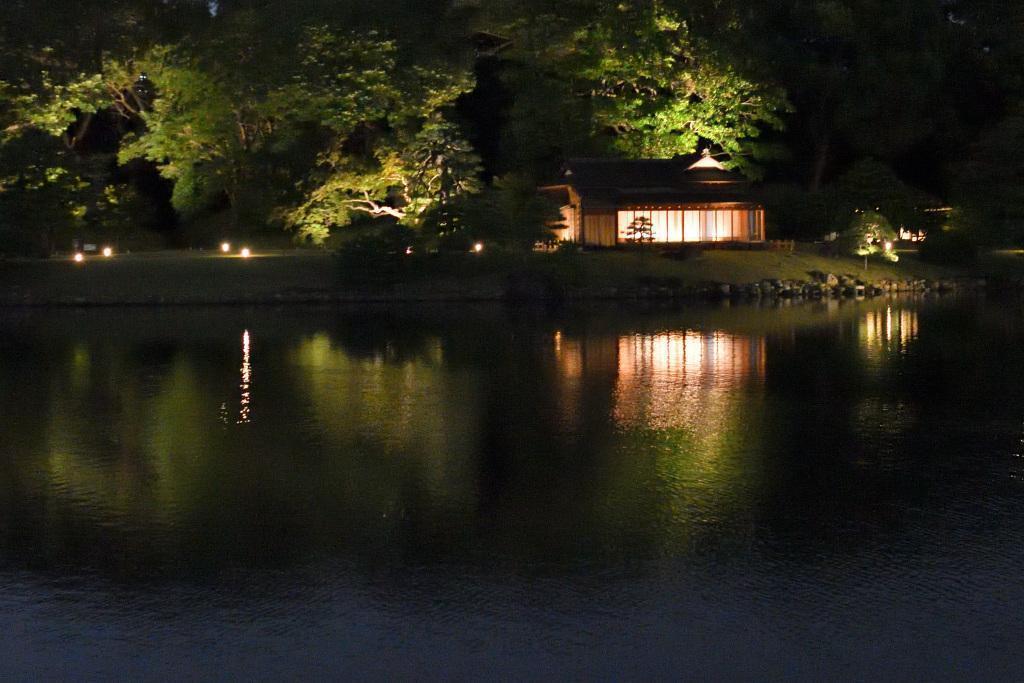
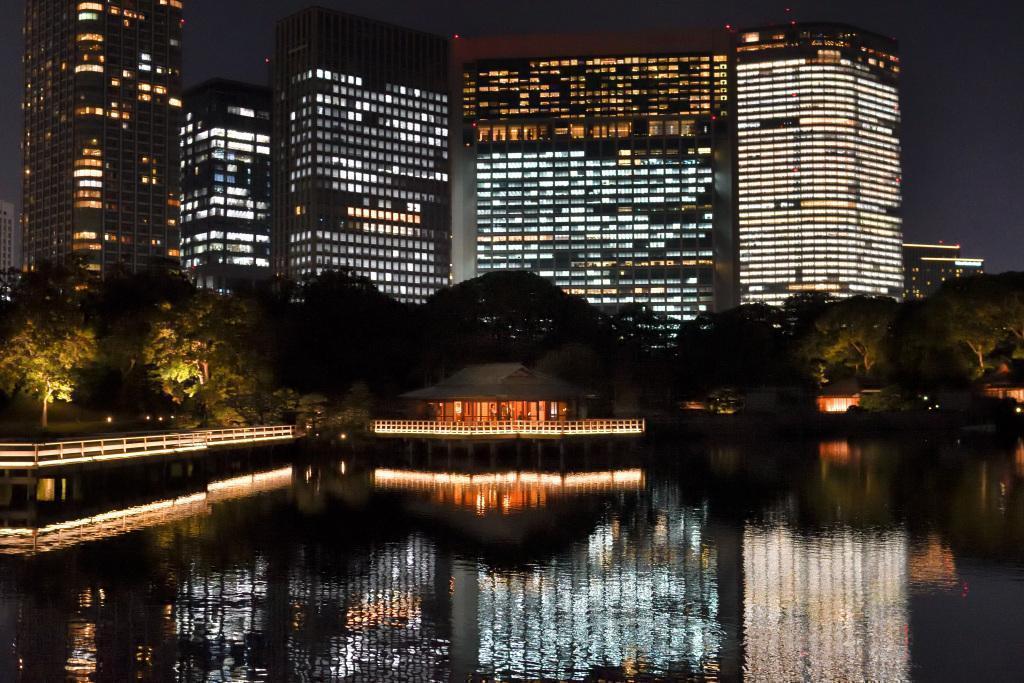
Normally, visitors would cross the Otsutae Bridge to reach the Nakajima Tea House, but the north side of the bridge is currently closed for construction. Instead, we walked along the outer path on the right side of the pond. From there, the view of the Nakajima Tea House and city lights across the water was stunning—a perspective that is usually not accessible.
Nakajima Tea House
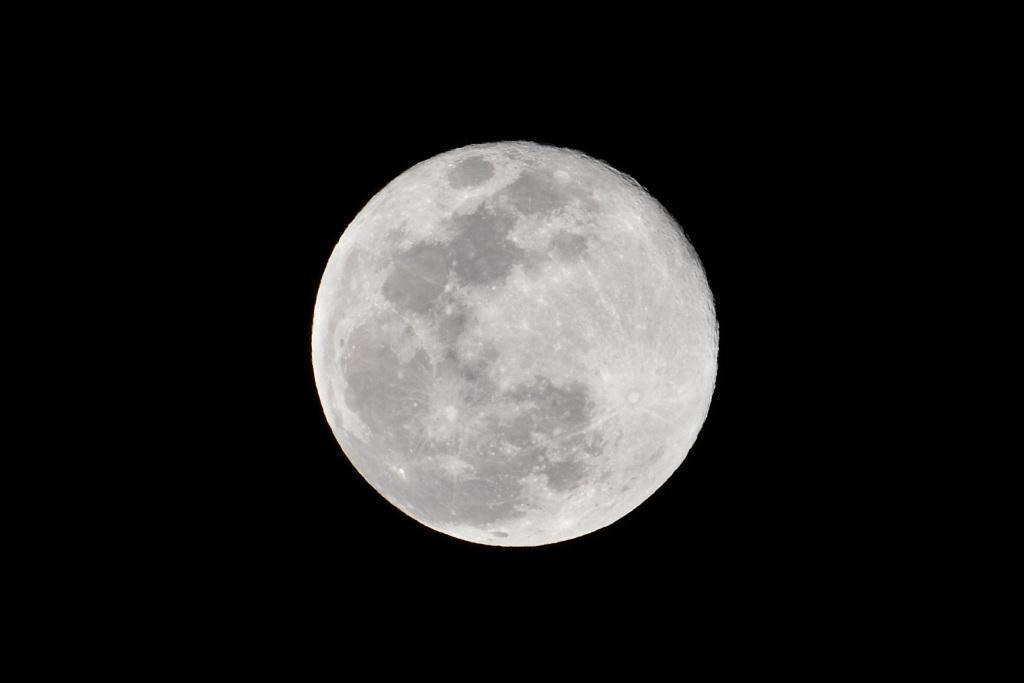
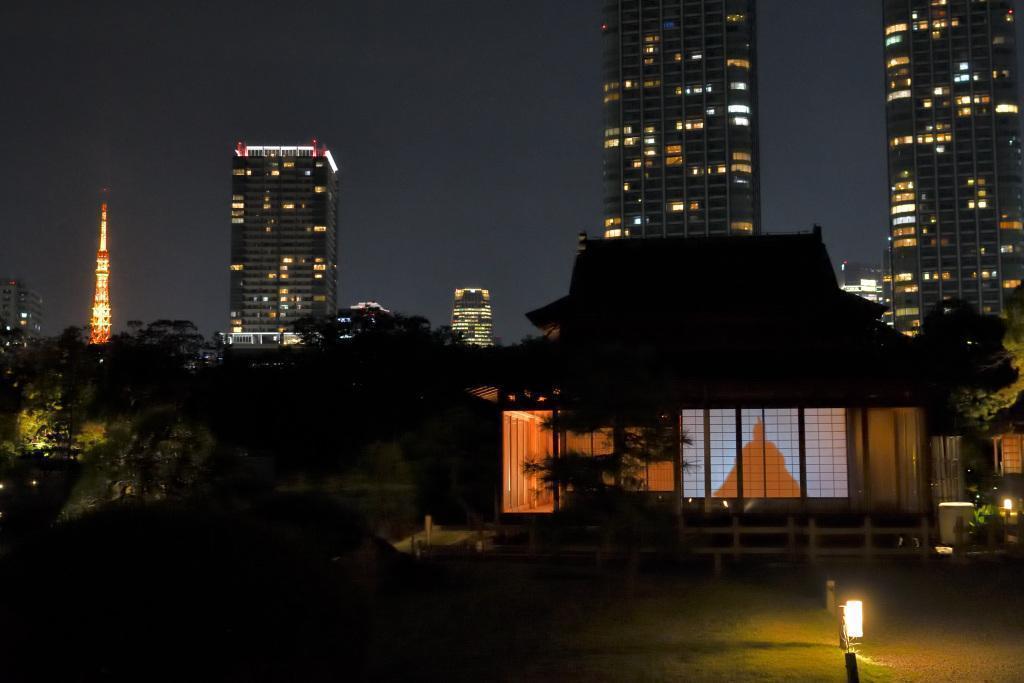
After enjoying the view across the pond, we visited the Nakajima Tea House (the photo at the top of this post). From its spacious wooden terrace, visitors can admire the night scenery of the tidal pond. On the day I visited, it was rather cloudy, but I could still see the moon. Perhaps the moon on the thirteenth night looked just like this. During the event, a special set of matcha tea and traditional Japanese sweets, as well as sake, is available for purchase.
The Moon-Offering Table
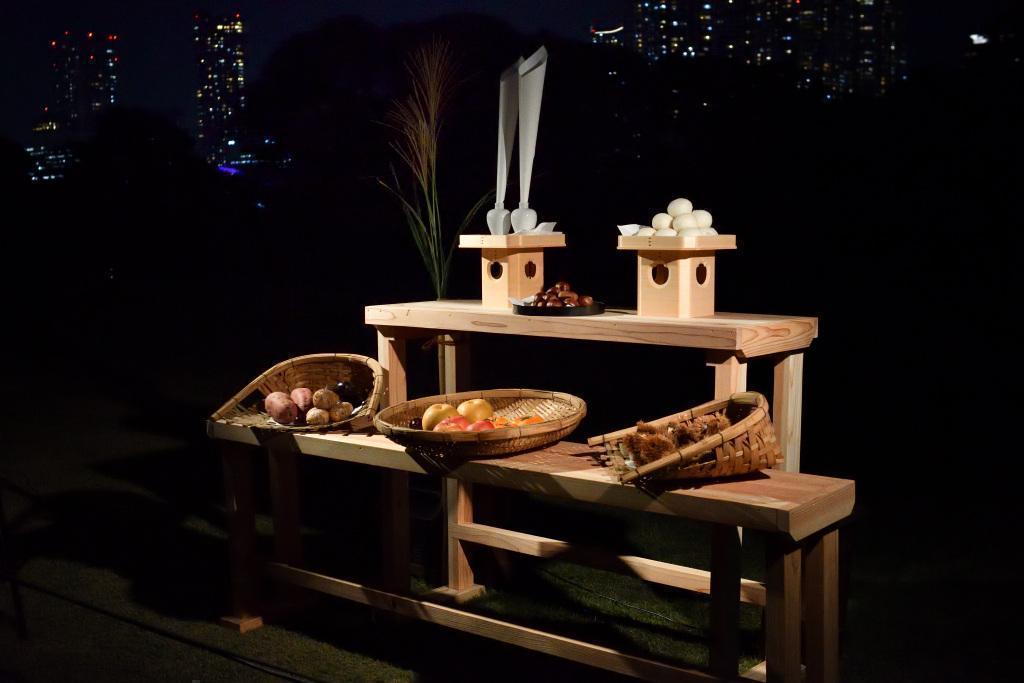
After visiting the Nakajima Tea House, we crossed the Otsutae Bridge to the southern side and walked along the opposite outer path, completing a full circle around the pond. Along the way, a moon-offering table had been set up, where offerings such as moon-viewing rice dumplings and vegetables could be placed. The pampas grass used in the display was gathered from within Hamarikyu Gardens.
Completing the Pond Circuit and the Three Tea Houses
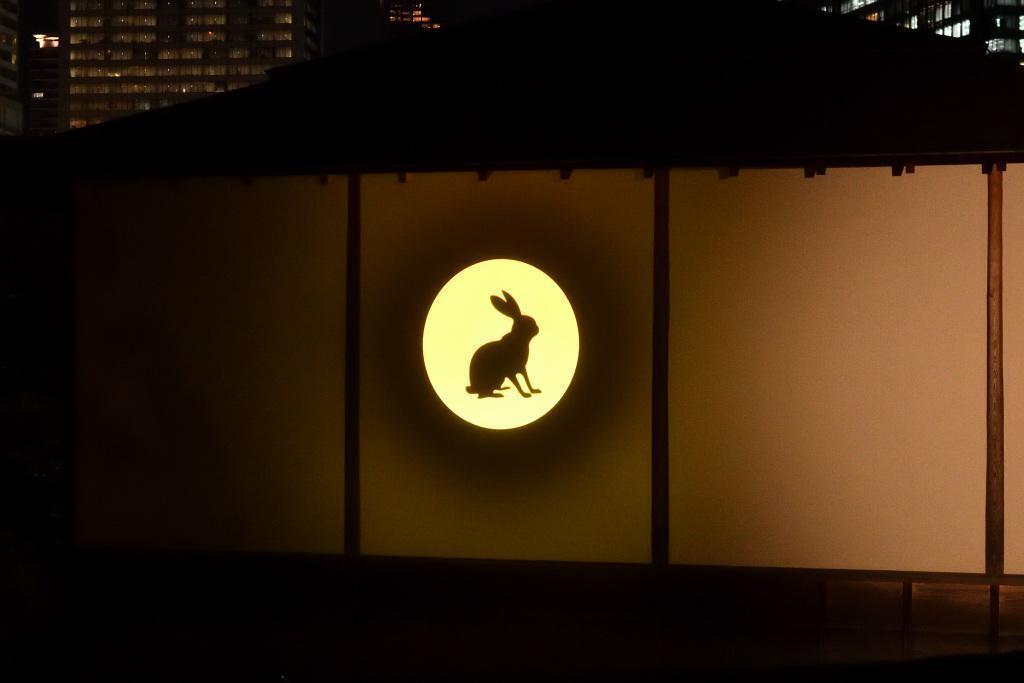
After passing the moon-offering table, we continued around the pond and arrived at the three tea houses: Matsu (Pine Tree), Taka (Hawk), and Tsubame (Swallow) Tea Houses. For this preview event, this spot marked the end of our tour. Each tea house was subtly illuminated to enhance the moon-viewing atmosphere. One of them featured a display designed to evoke the image of a shogun enjoying the moon centuries ago. In combination with the distant lights of Tokyo Tower, the scene was even more enchanting.
Reflections
I found the darkness itself to be very comfortable.
In Tokyo, it is normal for the night to be almost as bright as the day, so experiencing real darkness feels rare and special. The garden’s lighting is modest, not flashy like in commercial districts, allowing the moon to remain the centerpiece. Being able to enjoy the quiet and darkness in the middle of the city was truly a unique experience.
Hama-rikyu Gardens: Opening Hours, Holidays, and Admission
Regular hours: 9:00 a.m. – 5:00 p.m. (last entry at 4:30 p.m.)
Extended hours for the moon-viewing event (Oct 31–Nov 5, 2025): 9:00 a.m. – 9:00 p.m. (last entry at 8:30 p.m.)
Closed: December 29 – January 1
Admission fees:
Adults: 300 yen
Seniors (65+): 150 yen
Elementary school children and junior high students living/attending school in Tokyo: Free
Access:
Address: Hama-rikyu Gardens, 1-1 Hama-rikyuteien, Chuo-ku, Tokyo
Toei Oedo Line: Shiodome Station, 7-minute walk
JR, Tokyo Metro Ginza Line, Toei Asakusa Line: Shimbashi Station, 12-minute walk
Yurikamome Line: Shiodome Station, 7-minute walk
For additional details, visit:
Hama-rikyu Gardens
The moon over Hamarikyu on a fantastic night