 オフィシャル
《Best viewing spot》
The Sanno Festival: June 12 (Fri) to 14 (Sun)
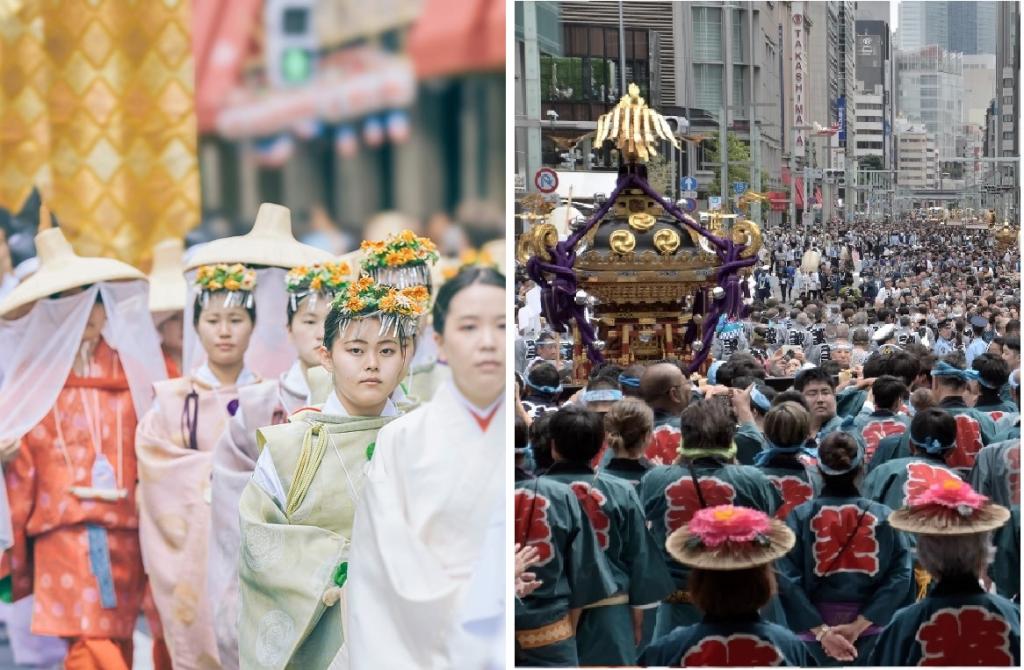
The Sanno Festival has a long history dating back to the Edo period, and even the Tokugawa shoguns enjoyed it. This year, the main festival of the Sanno Festival, the Jinkosai (Jinko Festival), will be held.
The Sanno Festival
The Sanno Festival has been held every June for more than 500 years. Since the time of the third Shogun Iemitsu, floats and portable shrines were allowed to enter the Edo Castle, and the Sanno Festival became a grand "Festival under heaven (Tenka Matsuri)" with the Shogun's attendance. It is considered one of the "Three Great Festivals of Japan" along with the Gion Festival in Kyoto and the Tenjin Festival in Osaka. During the reign of the fifth Shogun Tsunayoshi, it was decreed in 1681 that the Sanno Festival should be held as "the main festival" every other year, alternating with the Kanda Festival as "the lesser festival". Since the expenses for these festivals were paid by the Shogunate, the festivals were also known as "Shogun's Festivals". Together with the Kanda Festival and the Fukagawa Hachiman Festival, it is also known as one of the "Three Great Festivals of Edo".
For more information, visit the official website: https://www.hiejinja.net/
Jinkosai (June 12th)
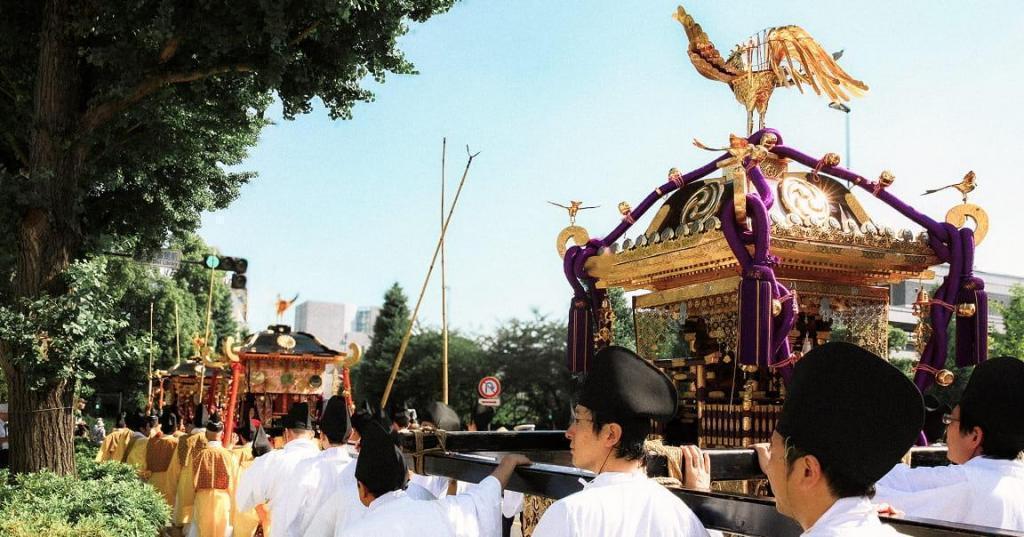
The Jinkosai (Jinko Festival), which is held once every two years during the Sanno Festival, is the biggest event of the festival. Two imperial carriages carrying the spirits of gods, a portable shrine (miya-mikoshi), and three floats make a day-long procession through the area known as "the largest Ujiko (shrine parishioners) district in Tokyo". The procession of portable shrines stretches as long as 300 meters.
《Best viewing spot》
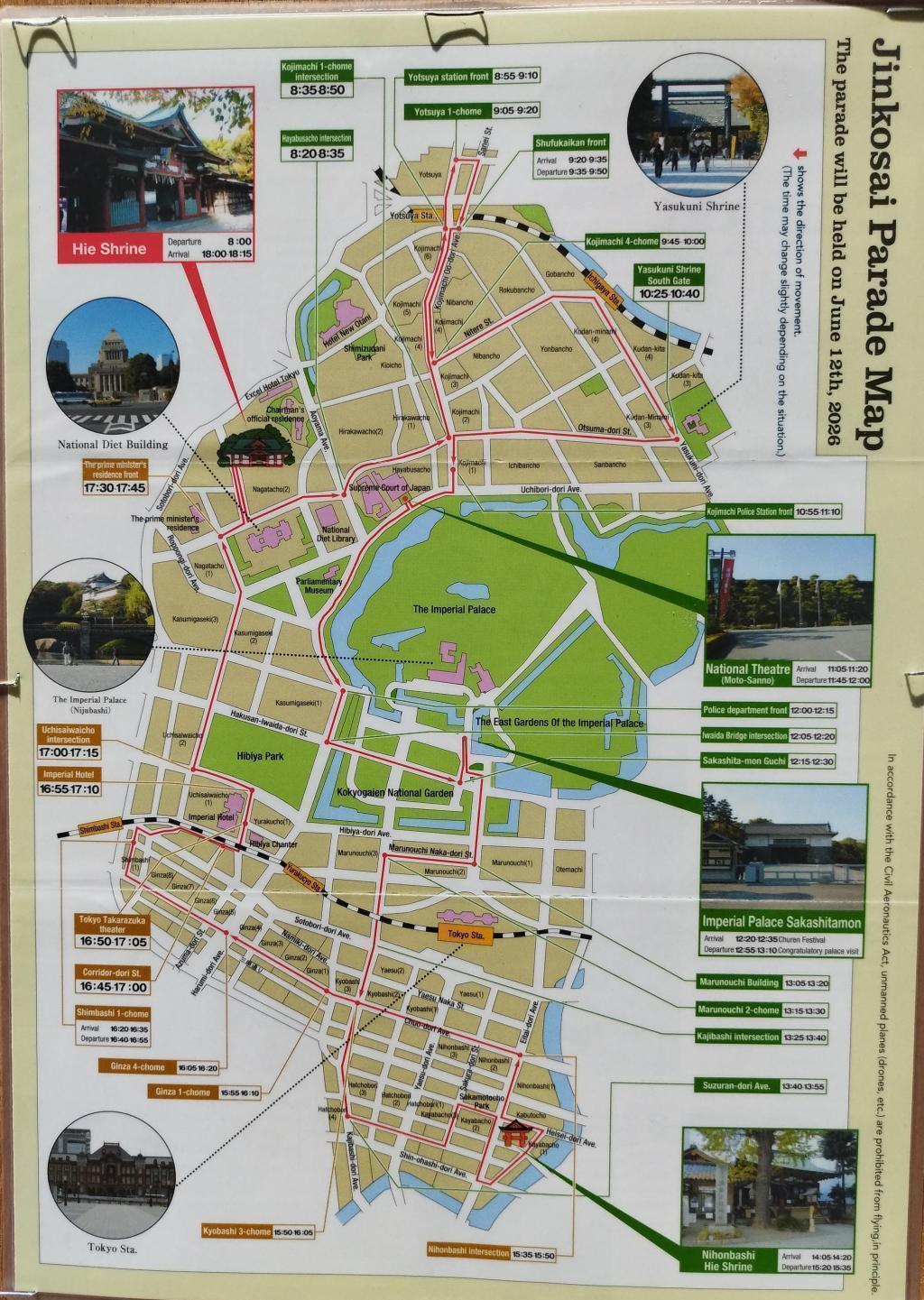
The best viewing spot is Chuo-dori Avenue. The procession will pass through Chuo-dori Avenue around 4:00 PM. It will start near Nihonbashi Bridge between 3:35 PM and 3:50 PM, proceed along Chuo-dori Avenue towards Ginza, and is expected to arrive at the Ginza 4-chome intersection between 4:05 PM and 4:20 PM.
The United Downtown Mikoshi Procession (Shitamachi Rengo Mikoshi Parade) (June 14th)
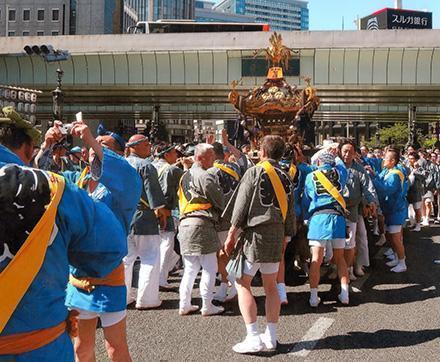
In the Edo period (1603-1867), during the Sanno Festival, Ujiko people would parade with floats, and after the Meiji period (1868-1912), the procession marched with portable shrines (mikoshi). However, after World War II, affected by the influence of urbanization, the number of people to carry potable shrines decreased, and the portable shrine processions of each town council lost their liveliness. Sensing the crisis of disappearance of tradition, the youth of the Nihonbashi district (Nichihachi-kai) in the "downtown area" called on the neighboring Kyobashi district and the Kayabacho district, started a "joint parade of mikoshi carried by town councils” in 2006. In 2008, Hatchobori joined in, and the entire "downtown" areas under the Edo Castle now cooperate in the joint procession.
《Best viewing spot》
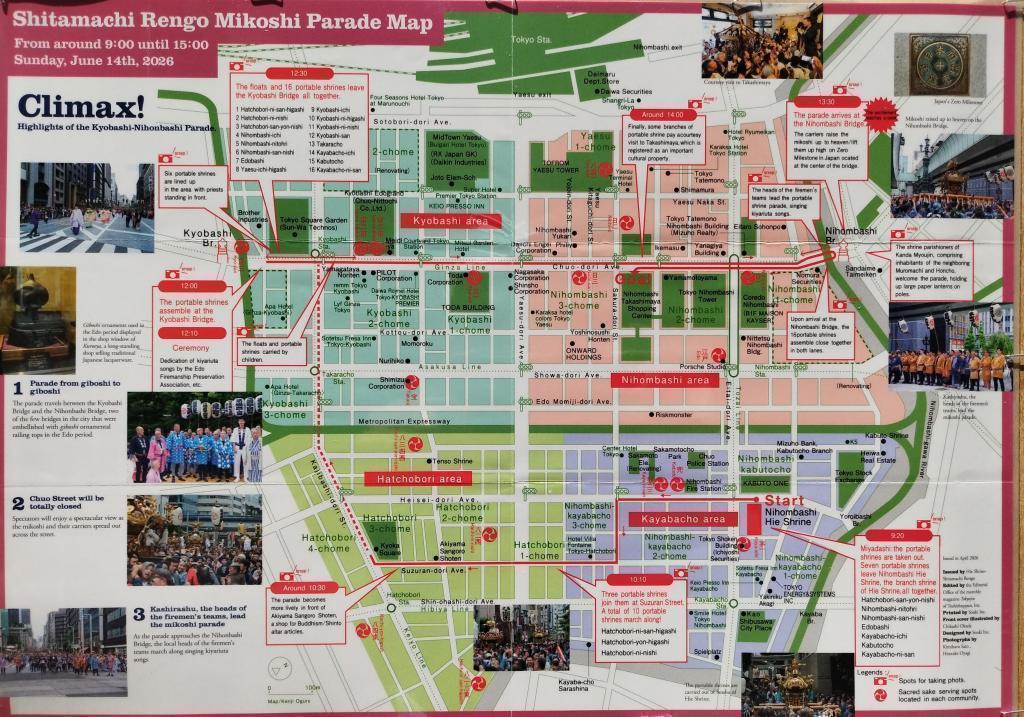
The best viewing spot is Chuo-dori Avenue. The portable shrine will depart from Tokyo Square Garden in Kyobashi at 12:30 PM, proceed along Chuo-dori Avenue, and arrive at Nihonbashi Bridge around 1:30 PM. The event will reach its climax on Nihonbashi Bridge.
Sources and References
Chuo-ku Tourism Association, Central Tokyo for Tourism, Hie Shrine, Hie Shrine Shitamachi rengo, Tokyo Guide